



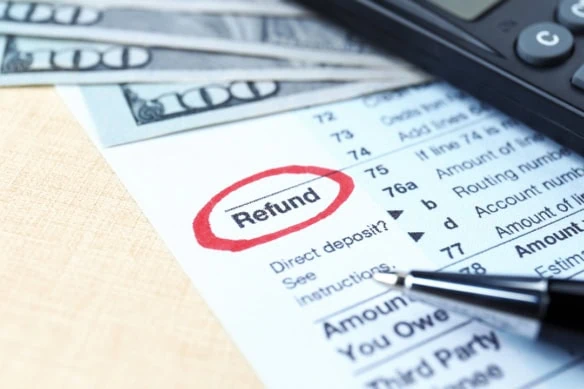
Will you get a bigger tax refund this year?
According to several estimates, the average refund will be about $1,000 higher this year. So the numbers would appear to be on our side.
However, while it’s certainly true that some people will get a larger refund (or smaller tax bill) this year because of tax law changes made by the “One Big Beautiful Bill,” not everyone will be so lucky. And it remains to be seen if the average refund will actually rise by $1,000 for the year once all the numbers are in.
If you’re keeping your fingers crossed for a big payday from the IRS, take a look below at the average tax refund so far. And if that amount gets you excited, we’ll explain why refunds for tax year 2025 are expected to be higher, and let you know who is more likely to get a bigger refund this year.
Featured Financial Products
What’s the Average Tax Refund So Far This Tax Season?

As of Feb. 13, 2026 (the most recent data available), the IRS has processed over 31 million tax returns and issued almost 13 million refunds.
For all the refunds issued so far, the average amount is $2,476, which is $307 (or 14.2%) higher than the average refund at the same point during last year’s tax season (which was $2,169).
While this is a far cry from the expected extra $1,000 that I mentioned earlier, remember: It’s still early in the 2026 tax filing season. Plus, the latest figures don’t include refunds for people claiming either the Earned Income Tax Credit or Additional Child Tax Credit, which the IRS can’t issue before mid-February.
Why Are Tax Refunds Expected to be Higher This Year?
Generally speaking, you get a tax refund from the IRS when the federal income taxes you paid during the year through paycheck withholding and/or estimated taxes are greater than the taxes you owe for the year (as reported on your tax return).
So, for example, if too much tax is withheld from your income, or your tax bill is cut, you could end up with a larger tax refund … and the “One Big Beautiful Bill” (OBBB), which was enacted in July 2025, made both of these things possible for millions of Americans.
First, the OBBB created four new tax deductions and expanded several other tax breaks for the 2025 tax year. These changes will reduce the amount of tax owed for qualifying taxpayers. Among other things, the legislation enhanced or added the:
- Child tax credit (increased from $2,000 to $2,200 per eligible child)
- Standard deduction (increased it by 5%)
- State and local taxes (SALT) deduction (increased the maximum deduction from $10,000 to $40,000)
- Senior deduction (added new deduction)
- Tip deduction (added new deduction)
- Overtime deduction (added new deduction)
- Car loan interest deduction (added new deduction)
Second, after these changes were made, the IRS didn’t adjust the 2025 withholding tables used by employers to calculate the amount of federal income tax to withhold from their employees’ paychecks. As a result, for people who can benefit from the new or improved tax breaks listed above, their withholding wasn’t reduced by a corresponding amount. This caused over-withholding for many people in 2025.
Likewise, the estimated tax payment rules weren’t adjusted after the OBBB’s passage. So, self-employed people and other taxpayers who made estimated payments for the 2025 tax year may have also paid more tax in advance than necessary.
So, again, if you can take advantage of any of the OBBB changes, and your 2025 withholding or estimated tax payments stayed the same, this will likely either:
- Trigger a tax refund
- Boost the tax refund you would have otherwise received
- Cut the tax bill you would otherwise have to pay when you file your return
Which outcome applies will depend on all the factors that make up your overall tax situation.
Related: Tax Prep Checklist [Get Ready to File Your 2025 Tax Return]
Who Could Get a Bigger Refund This Year?

Millions of people could potentially receive a larger tax refund this year because of the new or enhanced tax breaks enacted by the OBBB. For instance, the following taxpayers might get a larger refund under the OBBB:
Families with children: The increased child tax credit will put more money in your pocket. Since the credit is worth $2,200 per eligible child, families with more than one child will qualify for a larger overall credit. Plus, some of the credit may be “refundable,” which means a portion of the credit will be paid back to you even if you owe no or little tax.
Seniors who are at least 65 years old: The new senior deduction is worth up to $6,000 per eligible person. If you’re married and both you and your spouse were at least 65 years old at the end of 2025, your combined deduction could be as much as $12,000. However, if your income is too high, your deduction will be reduced (potentially to $0).
Residents in high-tax states: If you pay a lot of state and/or local income, sales, or property taxes, you might be able to deduct an additional $30,000 of those taxes on your federal income tax return. That’s because the SALT deduction cap was raised from $10,000 to $40,000 (although the cap can drop back down to $10,000 if your income is above a certain threshold). Note that you have to itemize in order to claim the SALT deduction (so you can’t claim the standard deduction), and you have to choose between deduction state and local income taxes or sales taxes (you can’t deduct both).
Workers who receive tips or earn overtime pay: New tax deductions for tip income and overtime pay will help a lot of workers. However, not all tips or overtime pay are deductible, and various restrictions apply. For instance, you can only deduct the first $25,000 of qualified tips received during the year, or the first $12,500 of overtime pay earned during the year (up to $25,000 for joint filers). These deductions are also gradually phased-out if your income is above a certain amount.
Non-itemizers: If you take the standard deduction instead of claiming itemized deductions on Schedule A (you can’t claim both), you’ll benefit from the OBBB’s increased “regular” standard deduction amount for 2025. Since close to 90% of all taxpayers claim the standard deduction, the 5% increase will help a lot of people. Plus, if you’re 65 or older, or blind, you can take an “additional” standard deduction of either $1,600 or $2,000, depending on your filing status. If you’re both 65+ and blind, you can double the additional amount.
New-car owners: If you took out a loan in 2025 to buy a new car that was assembled in the U.S., you may be able to deduct up to $10,000 of interest you paid last year on the loan. However, this deduction is also gradually reduced (or completely eliminated) if your income is too high. You can find out if your car was assembled in the U.S. by checking the car’s “window sticker” or entering its VIN in the National Highway Traffic Safety Administration’s online VIN Decoder.
Related: How Is Retirement Income Taxed?
Make Young and the Invested your preferred news source on Google
Simply go to your preferences page and select the ✓ box for Young and the Invested. Once you’ve made this update, you’ll see Young and the Invested show up more often in Google’s “Top Stories” feed, as well as in a dedicated “From Your Sources” section on Google’s search results page.
How Can Workers Avoid a Large Refund Next Year?
You might be thinking: “Why would I want to avoid a big refund next year!?” That’s a fair question.
I understand the excitement when the IRS drops a big refund payment into your bank account. But a tax refund basically means you gave Uncle Sam an interest-free loan. For workers, the extra taxes withheld from each paycheck, which generated your refund, could have been earning interest in your bank account during the year, instead of in the government’s account.
It’s generally best if the amount of federal income tax withheld from your paychecks during the year comes close to the amount of tax you’ll owe for the year. That way, you’ll either get a small refund or only pay a small amount when you file your return.
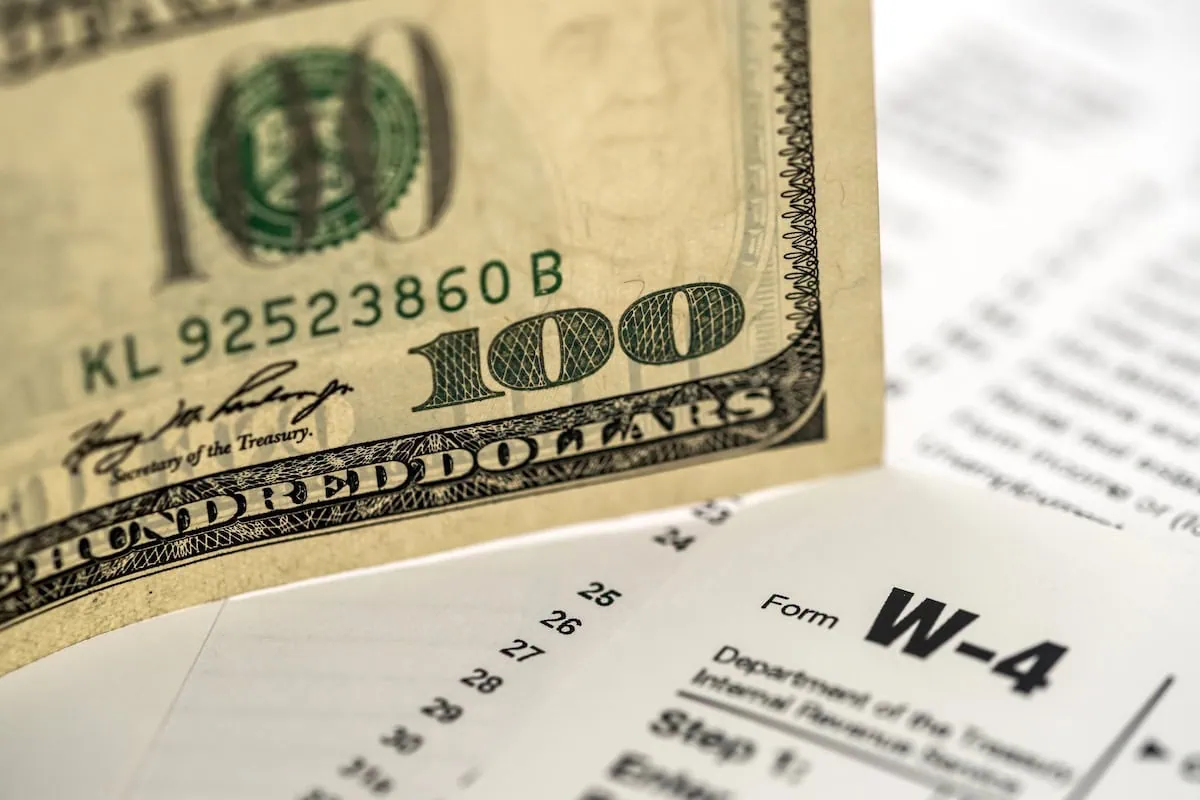
To reach that balance, workers can submit a new W-4 form with their employer. Your employer will then use the new form to reset your income tax withholding. Plus, the IRS recently updated the W-4 form to account for the OBBB changes. So, if you receive a big refund this year because of the new or improved tax breaks from the OBBB, completing a new W-4 form should help correct your withholding for 2026.
For more information, see When and How to Adjust Your Tax Withholding.
Copyright © 2026 by Rocky Mengle. All rights reserved. Used with permission.
Featured Financial Products
Please Don’t Forget to Like, Follow and Comment

Did you find this article helpful? We’d love to hear your thoughts! Leave a comment with the box on the left-hand side of the screen and share your thoughts.
Also, do you want to stay up-to-date on our latest content?
1. Follow us by clicking the [+ Follow] button above,
2. Subscribe to Retire With Riley, our free weekly retirement planning newsletter, and
3. Give the article a Thumbs Up on the top-left side of the screen.
4. And lastly, if you think this information would benefit your friends and family, don’t hesitate to share it with them!