




Dividend stocks are a staple of any investment portfolio for a couple of pretty straightforward reasons.
For one, the dividends themselves. Cash distributions from a company to its shareholders are an extra source of return that can either add to price gains or help soften price losses. But also, as a general rule, companies that decide to pay dividends must generate meaningful profits, so a dividend program is often a signal of some baseline level of bottom-line stability.
That doesn’t mean all dividend stocks are smart investments, however. Some companies might pay out negligible amounts of cash that don’t really add much to their performance. Some might pay dividends that are currently massive but also sustainable, at risk of being cut or suspended if the next quarter or two come in soft.
For this reason, income investors need to thoughtfully balance the need for “yield” and the need for quality, stability, and consistency in their holdings.
Let’s look at nine of the top dividend stocks for people looking to add established, cash-distributing blue chips to their portfolios (as well as three extra picks that pay dividends on a more frequent basis than your average company).
Editor’s Note: Tabular data presented in this article is up-to-date as of Jan. 13, 2026.
Featured Financial Products
Disclaimer: This article does not constitute individualized investment advice. Individual securities, funds, and/or other investments appear for your consideration and not as personalized investment recommendations. Act at your own discretion.
Table of Contents
What Is Dividend Yield?

The most looked-at metric in the dividend universe is known as dividend yield. This simple financial ratio tells you the percentage of a company’s share price that is paid out across a year’s worth of dividend distributions.
Expressed as a mathematical equation, it’s:
Dividend yield = annual dividend / price x 100
Dividend yield normalizes dividend payments regardless of stock price, different quarterly payments, even different payment frequencies (like monthly or annually). For instance, each of the following fictional stocks all have a dividend yield of 2%:
— Alpha Corp. currently trades for $50 a share. It pays a 25¢ quarterly dividend, for $1.00 per year in full. ($1 / $50 x 100 = 2.0%)
— Beta Inc. pays $1 in the first quarter, $2 in Q2, $3 in Q3 and $4 in Q4. That’s $10 in dividends for the full year. It trades for $500 a share. ($10 / $500 x 100 = 2.0%)
— Gamma Ltd. pays $2.00 just once per year. It trades for $100 a share. ($2.00 / $100 x 100 = 2.0%)
Dividend yield helps you focus on the percent of your initial investment that you get back, and allows you to compare apples to apples.
Falling Prices or Rapid Dividend Payout Growth?
If you follow this math a step further, you’ll discover that a company can suddenly reach a very high dividend yield in two very different ways: 1.) the dividend growing very rapidly … or 2.) the share price falling very quickly.
Let’s say Alpha Corp., which trades for $50 per share, pays a 25¢ quarterly dividend that yields 2.0%. In a month, it yields 4.0%. Here are two ways that could have happened:
— Alpha Corp. doubled its dividend to 50¢ per share, for a full $2 per share across the year. The share price stays the same. ($2 / $50 x 100 = 4.0%)
— Alpha Corp. kept its dividend the same, but its share price plunged in half to $25 per share. ($1 / $25 x 100 = 4.0%)
Clearly, that 4% yield appears to be much safer and reliable in one scenario than the other.
How Does Dividend Growth Work?
Of course, yield is normally a function of what we know now—not how a business might change in the future. Many companies exhibit dividend growth over time.
There’s no universal rule about how companies might raise or reduce their payments, but generally dividend stocks tie these profit sharing plans to earnings growth.
In other words, if a company is making more profits, then they have more cash to spread around to shareholders. And if they hit a serious snag, there’s a chance dividends could be cut or eliminated to shore up finances.
Like Young and the Invested’s content? Be sure to follow us.
What Is a Payout Ratio?
As with dividend yield, it’s important to normalize the dividend payout ratio for a stock. This is simply the percentage of a company’s earnings per share that is being distributed via dividends. It’s calculated as:
Payout ratio = dividends per share / earnings per share x 100
As an example, a stock that makes $100 million in profits and has 10 million shares of public stock has $10 in earnings per share. And if that company pays $5 annually in dividends, it has a payout ratio of 50% ($5 / $10 x 100 = 50%).
Related: The 12 Best Vanguard ETFs for 2026 [Build a Low-Cost Portfolio]
What Is Yield on Cost?
When you look up a stock’s information, the dividend yield listed is based on the most recent dividend and the current stock price.
That yield is often actually different than the one current shareholders enjoy. That yield is called “yield on cost,” which is the payout based on what you paid, at the moment you invested.
Let’s say you buy a stock at $100, and it pays $1 per share. It yields 1.0% when you buy it ($1 / $100 x 100 = 1.0%).
In a year, that stock has doubled to $200 per share, and it also doubled its dividend to $2 per share. If you look up its information, its dividend is still 1.0% ($2 / $200 x 100 = 1.0%).
That’s not your yield on cost, however. You’re still receiving that higher dividend of $2 per share. But your cost basis is still the original $100 you bought the share at. So now, your yield on cost has doubled, to 2.0% ($2 / $100 * 100 = 2.0%)!
Do you want to get serious about saving and planning for retirement? Sign up for Retire With Riley, Young and the Invested’s free retirement planning newsletter.
Beginners’ Best Stocks to Buy for Receiving Dividends
If you think all this math is tedious, you’re not alone! But remember: Not all dividend stocks look alike. They come in all shapes and sizes, and metrics like dividend yield and payout ratio help investors make more informed decisions.
As with many things on Wall Street, it’s misleading to look at just a single number in a vacuum. Whether you’re investigating share price or dividend payments or earnings per share, these metrics only matter when you can compare them fairly with another company’s performance.
Now that you have a basic understanding of how companies pay dividends and why measures like dividend yield are important, let’s move on to some of the best options for income investors right now.
Stocks are listed in order of yield, from lowest to highest.
Related: 7 High-Quality, High-Yield Dividend Stocks
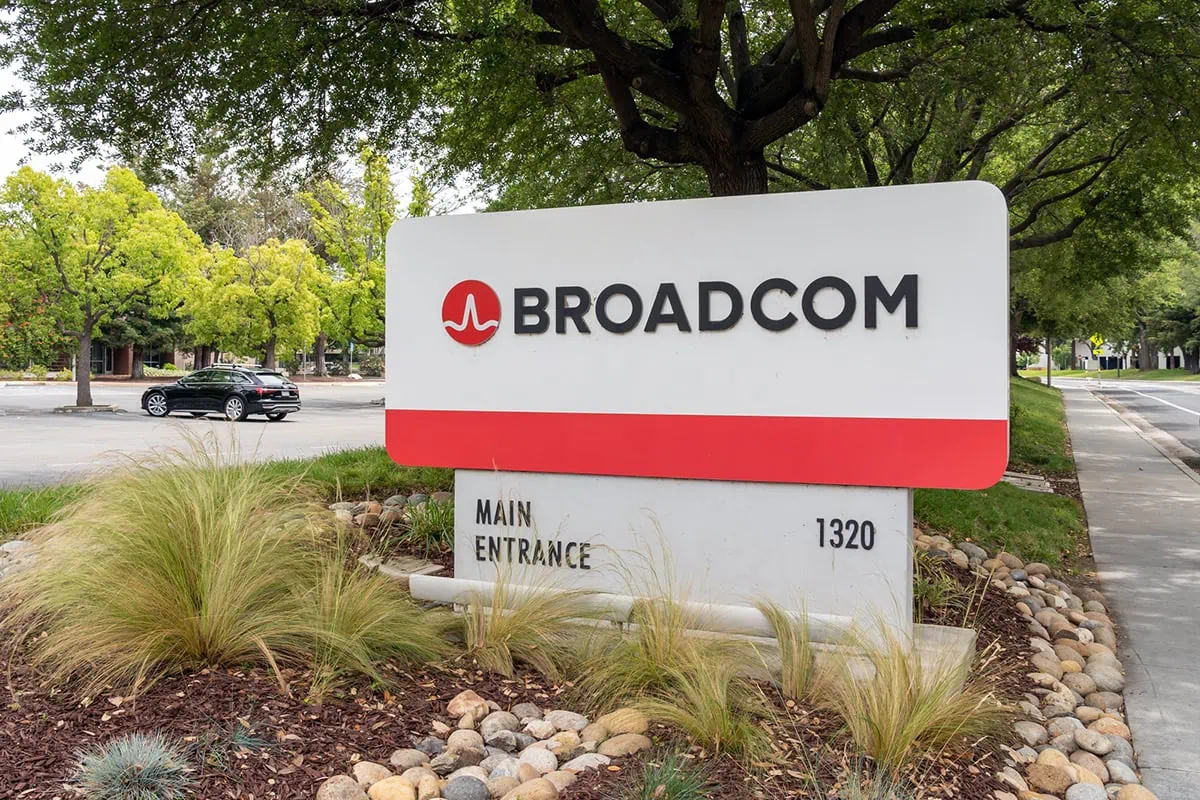
12. Broadcom (AVGO)
— Sector: Technology
— Market cap: $1.7 trillion
— Dividend yield: 0.7%
Broadcom (AVGO) is a prime example of how dividend growth is sometimes more important than headline dividend yield.
Broadcom is one of the world’s largest semiconductor companies. It designs, develops, manufactures, and supplies semiconductor and infrastructure software products for a wide variety of uses. Artificial intelligence (AI) is first to mind, but its chips also power datacenters, networking, wireless, storage, industrial automation, and much more.
The company has been an innovator in its own right, but you can also chalk up much of its scale to a history of aggressive merger-and-acquisition (M&A) activity. The company—itself the product of a 2016 merger between Broadcom Corporation and Avago Technologies (hence the AVGO ticker)—has swallowed up the likes of LSI Corporation, Brocade, CA Technologies, VMware, and Symantec’s enterprise security business.
Related: 9 Best Fidelity ETFs for 2026 [Invest Tactically]
Technology stocks as a group don’t deliver much in the way of dividend yield. Indeed, many of the largest and most dynamic companies out there—such as Advanced Micro Devices (AMD) or Adobe (ADBE)—don’t pay a penny in dividends. That’s because they need to cycle every last cent of profits back into research, development, and other areas that will help further grow the business.
That’s why Broadcom stands out. Sure, the sub-1% yield is less than ideal. But Broadcom makes up for that with intense dividend growth, and that can be every bit of rewarding for shareholders who have any patience.
AVGO has improved its quarterly payout by nearly 30% annually on average since the Avago-Broadcom merger in 2016. From a practical perspective, here’s what that looks like: Accounting for Broadcom’s 2024 10-for-1 stock split, someone in 2016 who bought right after the merger (at a split-adjusted $13 per share or so) did so at a headline yield of roughly 1.4%. Not only are those shares up by more than 2,600% since then, but they’re earning an insane yield on cost of 20%!
Despite all that, the dividend represents a mere 25% of Broadcom’s expected 2026 profits, leaving all sorts of money to pay for more R&D … and plenty of room to keep expanding the dividend, too.
Make Young and the Invested your preferred news source on Google
Simply go to your preferences page and select the ✓ box for Young and the Invested. Once you’ve made this update, you’ll see Young and the Invested show up more often in Google’s “Top Stories” feed, as well as in a dedicated “From Your Sources” section on Google’s search results page.
11. Bank of America (BAC)
— Sector: Financials
— Market cap: $400.8 billion
— Dividend yield: 2.0%
Bank of America (BAC) is one of the world’s largest banks, serving roughly 70 million Americans through 3,600 branches and 15,000 ATMs across 39 states. However, Bank of America is much, much more than its consumer business—it also provides financial products and services for small and midsized businesses, large corporations, institutional investors, and even governments.
That breadth of business means a breadth of offerings, which range from checking and savings accounts to commercial loans, trade finance, treasury management, and securities clearing.
Related: 10 Best Vanguard Funds for the Everyday Investor
The financial crisis of 2008 rocked most of the financial sector, BofA included. Bank of America was forced to cut its dividend from 64¢ per share in 2008 to a mere penny per share in 2009. BAC started to raise its payout again in 2014, though. True, on a nominal basis, the dividend still hasn’t returned to pre-Great Recession levels; however, at 28¢ per share after its last increase announced in July 2025, the stock still yields 2%, which is above the financial-sector average.
Bank of America’s roots go all the way back to 1784, and it’s one of the largest U.S. banks by assets. If you’re a long-term income investor, BAC is a financial stock you can believe in for many years to come.
Related: 7 Best High-Dividend ETFs for Income-Hungry Investors
Featured Financial Products
10. Equinix (EQIX)
— Sector: Real estate
— Market cap: $77.6 billion
— Dividend yield: 2.4%
Just a moment ago, I mentioned that tech stocks often don’t make for good dividend investments. Most startups need to invest aggressively in new staff or new products rather than share profits with investors, and even established tech companies tend to prioritize growth over dividends.
What makes Equinix (EQIX) such an interesting dividend stock, however, is that it’s a kind of hybrid between a traditional income investment and a tech operation.
EQIX is a real estate investment trust (REIT)—a special class of company that involves property owners and operators. These companies receive special tax considerations, and in return, they must distribute at least 90% of their earnings back to shareholders as dividends.
Related: The Best T. Rowe Price Funds for 2026
This particular real estate investment owns data center properties. And it has a lot of reliability, charging regular rent to deep-pocketed tenants who want to buy server space in Equinix’s digital infrastructure empire. After all, everyone wants their data to live on “the cloud,” but the physical hardware to host that data has to live somewhere—and that somewhere is on Equinix’s properties.
EQIX boasts almost half a million interconnections to more than 10,000 customers. It’s the leader in its field with consistent revenue growth (22 years’ worth of consecutive quarterly sales growth, and growing!)—and most importantly for dividend investors, a growing and extremely well-covered payout. Especially if the company continues to expand its top and bottom lines, robust dividend growth could very well be in the cards for years to come.
Related: 8 Best Stock Picking Services, Subscriptions, & Sites
9. Johnson & Johnson (JNJ)

— Sector: Health care
— Market cap: $513.6 billion
— Dividend yield: 2.5%
You might have heard or read someone refer to the best dividend stocks as “widow-and-orphan” investments. That’s because they’re the kind of assets you buy and hold forever—or at least until you die and pass them on as inheritance.
Johnson & Johnson (JNJ) is a prime example. It is among the 25 largest companies on Wall Street, with a massive brand and more than 135 years of operations.
It was long a consumer-health giant, but in 2023, JNJ spun off those operations—which included the likes of Tylenol and Band-Aid—into Kenvue (KVUE). But while that modestly reduced the overall footprint of the company, it also sharpened its focus on high-margin drugs and medical devices to ensure future success. Now, the top and bottom lines are driven by products such as inflammation treatment Stelara, multiple myeloma drug Darzalex, and medical technologies such as electrophysiology, biosurgery, and wound closure products.
Related: The 10 Best Dividend ETFs [Get Income + Diversify]
This company is deeply embedded in the health care system, and that helps maintain JNJ’s status as a top dividend stock that income investors can rely on through any market environment.
From a dividend perspective, the health care giant has raised its payouts for 63 years running—one of the longest track records on Wall Street. So it too is a Dividend King. But JNJ still has a payout ratio of less than 50%, hinting there’s ample headroom for future increases, too.
Johnson & Johnson is also one of the most credit-worthy companies in the world, ranking as one of just two U.S. companies with a top AAA rating for its corporate debt. Microsoft (MSFT) is the other, if you’re curious.
Related: The 7 Best Vanguard Index Funds for Beginners
8. Coca-Cola
— Sector: Consumer staples
— Market cap: $303.1 billion
— Dividend yield: 2.9%
Beverage maker Coca-Cola (KO) is another global consumer staples titan—one with more than 130 years of operating history, and operations in 200 nations around the world.
While it’s true that sugary soft drinks might not be a growth business in an age of healthy eating, it’s important to understand that Coke products have strong baseline demand. But it’s hardly reliant on Coke alone; the multibillion-dollar powerhouse owns brands including Vitaminwater, Fuze teas, Powerade energy drinks, Minute Maid juices, and many more.
Related: The Best Dividend Stocks: 10 Pro-Grade Income Picks for 2026
While it’s true that sugary soft drinks might not be a growth business in an age of healthy eating, it’s important to understand that Coke products have strong baseline demand. More important to understand is that Coke is far more than just Coke: This multibillion-dollar powerhouse owns a massive stable of beverage brands, including Vitaminwater, Fuze teas, Powerade energy drinks, Minute Maid juices, Fairlife milks, and many more.
That shows in the track record of KO stock: In 2025, the company approved its 63rd consecutive annual dividend increase, making it a Dividend King as well. And as far as future dividend growth is concerned? While Coca-Cola’s nearly 70% payout ratio is elevated, it’s not dangerously high. So while you might not expect a breakneck pace of dividend hikes going forward, KO likely will continue to nudge its distribution higher.
Do you want to get serious about saving and planning for retirement? Sign up for Retire With Riley, Young and the Invested’s free retirement planning newsletter.
7. Procter & Gamble (PG)
— Sector: Consumer staples
— Market cap: $335.6 billion
— Dividend yield: 3.0%
Consumer staples stocks—companies that make goods that are basic necessities—are some of the best dividend stocks because they aren’t prone to the ups and downs of discretionary companies. When times get tough, households spend less on vacations or designer jeans, but they keep going to the grocery store every week.
And when it comes to consumer stocks, Procter & Gamble (PG) is a powerhouse that’s hard to top.
Procter & Gamble got its start in 1837, when it was producing soap and candles. Today, it’s a global consumer-goods behemoth that boasts more than 60 brands, which include roughly two dozen brands that generate at least $1 billion in annual revenues. P&G’s stable is a who’s who of grocery-store staples: Cheer and Tide laundry detergent, Downy fabric softeners, Luvs and Pampers diapers, Bounty paper towels, Charmin toilet paper, Puffs facial tissues, Tampax tampons, Gillette razors, Cascade dishwasher detergent … I think you get the point.
Like Young and the Invested’s content? Be sure to follow us.
The company continues to innovate, even with its legacy brands. The company is currently expanding distribution of its recently created Tide evo—detergent in a tile form that requires no extra water and less packaging, helping P&G preserve the profit margins that helps it deliver a longstanding and growing dividend.
Procter & Gamble has one of the most storied dividend histories, including an incredible 135 consecutive years’ worth of cash distributions and 69 uninterrupted years of dividend growth, putting it in the ranks of both the Dividend Aristocrats (companies that have raised their dividends for at least 25 consecutive years) and the Dividend Kings (at least 50 years). P&G’s most recent hike was by 5% to $1.0568 per share quarterly, announced in April 2025.
Beginner investors could hardly do better than this vaunted dividend grower for both stability and income.
Related: The 16 Best ETFs to Buy for a Prosperous 2026
6. Consolidated Edison (ED)
— Sector: Utilities
— Market cap: $35.2 billion
— Dividend yield: 3.4%
Utilities are another sector to consider when looking for the top dividend stocks. Electricity and water are just as important as groceries and cleaning products, and the expensive infrastructure and highly regulated nature of publicly traded utilities means competition is hard to come by. In truth, most U.S. electricity companies are virtual regional monopolies with incredibly consistent demand for their products.
That’s what makes a stock like Consolidated Edison (ED) so attractive to income investors.
Related: 8 Best-in-Class Bond Funds to Buy
“ConEd” and its subsidiaries distribute electricity to about 4 million customers in New York City, as well as several other counties in New York State and New Jersey; and distribute natural gas to 1.2 million more. This dense area of the U.S. is certainly not going to be less reliant on energy anytime soon, translating into a nearly certain stream of revenue for this dividend stock.
This consistency has allowed ConEd, another Dividend Aristocrat, to provide 51 years of consecutive dividend increases to its stockholders. Like with Coca-Cola, the payout ratio is on the high side. However, it’s still plenty manageable at 60% of projections for this year’s earnings, and Edison features extremely stable earnings that can slowly but persistently grow over time—allowing its dividend to expand the same way.
Related: 9 Best Schwab ETFs to Buy [Build Your Core for Cheap]
Featured Financial Products
5. Prudential Financial (PRU)
— Sector: Financials
— Market cap: $40.9 billion
— Dividend yield: 4.6%
Some investors in dividend stocks might not see big banks as attractive as they once were in decades past. That’s OK. Prudential Financial (PRU) offers exposure to the financial sector in a different and more subdued way.
While Prudential does offer wealth management services, its core business comes from rather boring business lines such as life insurance and benefit administration for corporations. Unlike a big investment bank, there’s not really a lot of potential for windfall profits here. It’s just the mundane business of collecting premiums or helping small businesses manage their 401(k) plans.
Related: 7 Best Gold ETFs You Can Buy
That said, these admittedly boring business lines provide a lot of stability to operations. Prudential has steadily ratcheted up its paydays lately as a result, with its dividends soaring from 70¢ per share quarterly in 2016 to $1.35 presently. That kind of growth over the past decade or so should make anyone pay attention, even if the company isn’t as dynamic as other financial firms.
The icing on the cake? Even with one of the highest yields on this list, Prudential has a dividend payout ratio of less than 40% of its projected profits for 2026. That means those big-time increases in payouts aren’t just sustainable, but also have room for continued dividend growth in the years ahead.
Related: How to Get Free Stocks for Signing Up: 7 Apps w/Free Shares
4. Verizon Communications (VZ)
— Sector: Communication services
— Market cap: $164.9 billion
— Dividend yield: 7.1%
The top dividend stock for beginners, and one that has obvious staying power, is Verizon Communications (VZ).
It is the No. 1 wireless carrier in America right now, ahead of “Big Three” mates AT&T (T) and T-Mobile US (TMUS). And while there’s occasionally changes in the pole position, we live in an era in which mobile connectivity is a must-have for consumers and businesses alike—meaning there’s little chance of any widespread rollback in customers that would affect this pseudo-triopoly.
Like Young and the Invested’s content? Be sure to follow us.
What’s more, rather than chase subscriber market share in what has historically been a pretty entrenched marketplace, Verizon has instead focused on average monthly subscriber revenue lately in a bid to squeeze a bit more cash from the same people rather than engage in costly acquisition of new leads from its competitors.
This is the kind of long-term approach that income investors find appealing. Growth-oriented companies often bleed cash as they chase market share, but there are worse ideas than simply harvesting from an existing and loyal customer base to support generous dividend payments. Indeed, Verizon just upped the ante on its payout again, delivering a 2% increase to 69¢ per share announced in September.
That’s what VZ has been doing, and many expect it will continue to do so. Add in a yield that is double or even triple some of the other stocks on this list, and Verizon belongs among the best dividend stocks for beginners.
Related: The 9 Best ETFs for Beginners
3 Bonus Monthly Payers
The cycle of paying dividends is always different depending on the company. While it’s generally true that most U.S. corporations opt to pay their shareholders a dividend once per quarter, the dates aren’t fixed. Specifically, one company might pay you on a January-April-July-October payment cycle while another opts for February-May-August-November.
Complicating things further, some companies pay dividends twice a year, some pay once a year, and some even pay “special” unscheduled dividends.
But now, we’re going to take a look at three stocks that stand out from the pack not just because of their above-average dividend yields, but also their above-average dividend frequency.
The following three stocks pay us each and every month. (But you can check out this story to get the full list:10 Best Monthly Dividend Stocks for Regular, Frequent Income.)
3. SmartStop Self Storage REIT
— Sector: Real estate
— Market cap: $1.8 billion
— Dividend yield: 5.1%
SmartStop Self Storage REIT (SMA) is a self-storage REIT that owns and manages 236 properties representing 19.1 million square feet across the U.S. and Canada.
What’s attractive about self-storage? Well, it’s a business that can thrive in both up and down economies. When people have money to spend, they often spend it—sometimes to the point where they accumulate so much stuff, it no longer fits where they live, so they decide to stash it elsewhere. However, when times are tighter, people who are forced to downsize their living situation will often store many of their possessions in hopes that they’ll eventually be able to return to a larger place in time.
Related: The 13 Best Mutual Funds You Can Buy
That doesn’t mean self-storage can’t go through its own hiccups—it can and is, in fact. But SmartStop currently looks like one of the most resilient players in the space. It’s one of the growthiest such businesses in North America, recently entering the top 10 largest operators in the U.S. And it’s also one of the newest REIT listings—its initial public offering (IPO) was in April 2025, so it hasn’t even been on the markets for a year.
But so far, it has paid a monthly dividend, albeit oddly. As I write this, SMA has announced nine monthly dividends in nine months—four of them at 13.15¢ per share, and five at 13.59¢, and not in a particular order, either. Still, that adds up to an annualized yield of more than 5%.
Related: Best Vanguard Retirement Funds for a 401(k) Plan
2. Realty Income
— Sector: Real estate
— Market cap: $54.0 billion
— Dividend yield: 5.5%
Any roundup of the best monthly dividend stocks should include Realty Income (O), which literally bills itself as the “Monthly Dividend Company.”
No, really. They even registered the nickname.
Realty Income is a real estate investment trust focused on single-tenant commercial properties. It owns more than 15,500 properties in the U.S., U.K., and six other countries that are under long-term net-lease agreements. It currently boasts more than 1,600 different tenants—including 7-Eleven, Dollar General (DG), Walgreens (WBA), Wynn Resorts (WYNN), and Life Time Fitness (LTH)—across 90 widely varying industries.
Related: The 7 Best Dividend Stocks for Beginners
Realty Income also became a lot bigger in January 2024, when it closed on its $9.3 billion all-stock deal to acquire Spirit Realty Capital (SRC). Spirit Realty is another net-lease REIT whose properties are complementary to the Realty Income portfolio, though it will make same-store growth comparisons more difficult in 2025.
“O has been very active, acquiring both investment- and non-investment-grade assets,” say Stifel analysts, who rate the stock at Buy. “The company has one of the sector’s strongest balance sheets, in our view, the lowest costs of capital, and pays a consistent and growing monthly dividend.”
Another reason Realty Income is a king among monthly dividend stocks? The dividends, of course. Realty Income doesn’t just offer a high yield of more than 5%—it has paid 666 consecutive monthly dividends and increased the payout for 113 consecutive quarters.
Featured Financial Products
1. Realty Income
— Sector: Real estate
— Market cap: $11.6 billion
— Dividend yield: 7.3%
Healthpeak Properties (DOC) is one of several REITs that’s uniquely positioned to benefit from America’s aging population.
DOC is a real estate owner, operator, and developer that sits at the intersection of health care and retirement, with a 702-property portfolio leased out to biopharmaceutical companies, physician group practices, health systems, medical device companies, retirement companies, and more. Roughly 50% of its portfolio income comes from outpatient medical facilities, another 35% is derived from labs, and the rest comes from senior housing.
Related: 7 Low- and Minimum-Volatility ETFs for Peace of Mind
“We expect Healthpeak to see steady demand in its Outpatient Medical and Lab from ongoing growth in the healthcare, biotech, and pharmaceutical industries,” says Argus Research analyst Marie Ferguson, who rates the stock at Buy. “The REIT is also benefiting from the shift to smaller, specialized outpatient centers from primary care facilities. The company’s portfolio is weighted toward these smaller facilities, which typically offer advanced medical technology and provide patients with specialized care.”
While Healthpeak has paid a dividend for years, the monthly schedule of those dividends is a very new development. In February, the company approved its first dividend increase since 2016, and also announced it would be transitioning to a monthly distribution starting with the April 2025 payout. At current levels, DOC yields more than 7%.
Do All Companies Pay Dividends?
Not all companies pay dividends. Some companies choose not to, while other companies cannot afford to.
As you can tell by this list, the best dividend stocks are normally slow-and-steady companies that have consistent operations. While it might be possible for a small software company or biotech firm to double its share price overnight, these companies rarely pay dividends because they don’t have much in the way of profits—and what they do have, they want to spend on other things, like research and development to continue growing.
Like Young and the Invested’s content? Be sure to follow us.
What Should Income Investors Look for in a Dividend Stock?
There are a host of things to consider when looking for the best dividend stocks.
First, and foremost, you should make sure you understand the underlying business and its strategy; just because a company pays a dividend doesn’t mean it can’t crash and burn.
If you generally like what you see, then you should consider the quality of the dividends including the history of payouts and the payout ratio as a portion of total earnings.
Then, you should consider the quantity of that dividend and the potential for future growth in payouts.
Related: Best Fidelity Retirement Funds for a 401(k) Plan
Want to talk more about your financial goals or concerns? Our services include comprehensive financial planning, investment management, estate planning, taxes, and more! Schedule a call with Riley to discuss what you need, and what we can do for you.

Related: 15 Best Long-Term Stocks to Buy and Hold Forever
As even novice investors probably know, funds—whether they’re mutual funds or exchange-traded funds (ETFs)—are the simplest and easiest ways to invest in the stock market. But the best long-term stocks also offer many investors a way to stay “invested” intellectually—by following companies they believe in. They also provide investors with the potential for outperformance.
So if you’re looking for a starting point for your own portfolio, look no further. Check out our list of the best long-term stocks for buy-and-hold investors.
Related: 7 Best Vanguard Dividend Funds for 2026 [Low-Cost Income]
What’s better than a smart, sound dividend income strategy? How about a smart, sound dividend income strategy with very little money coming out of your pocket?
If that sounds good to you, you need look no farther than low-cost pioneer Vanguard, which offers up a number of payout-oriented products. Find out what you need to know in our list of seven top-notch Vanguard dividend funds.
Please Don’t Forget to Like, Follow and Comment

Did you find this article helpful? We’d love to hear your thoughts! Leave a comment with the box on the left-hand side of the screen and share your thoughts.
Also, do you want to stay up-to-date on our latest content?
1. Follow us by clicking the [+ Follow] button above,
2. Subscribe to Retire With Riley, our free weekly retirement planning newsletter, and
3. Give the article a Thumbs Up on the top-left side of the screen.
4. And lastly, if you think this information would benefit your friends and family, don’t hesitate to share it with them!