




Are you in the specific situation of both having money to burn and worrying about America’s public debt, there is something you can do about it.
Technically, anyways.
Believe it or not, but the Bureau of the Fiscal Service can accept gifts donated to the U.S. government to reduce America’s public debt—and indeed it does, in the tens to even hundreds of thousands each month. So if you feel like giving the country a present on its birthday (or any other time of the year), you can—and we’ll show you how.
Let me show you how you can donate to offset America’s public debt. I’ll show you who can donate, what you can donate, the process for doing so, and how much others have donated to the cause.
Featured Financial Products
Before You Donate

The national debt stood at more than $38 trillion as of the end of November 2025, according to the U.S. Treasury.
I’d compare any U.S. debt donation the average American could make to a drop in a bucket, but I’d be severely downplaying the relative significance of a drop of water.
Let’s call it closer to a drop in a Great Lake.
But regardless, you still can donate to offset the national debt if you so wish. The infrastructure exists. And the directions are pretty straightforward.
Who Can Donate?

Gifts to reduce the public debt may be from either of the following:
- Inter vivos (from a living person)
- Testamentary bequests (in a person’s will)
In other words, Americans can donate now or put it in their will to donate later.
What Can You Donate?

Fiscal Service, acting for the Secretary of the Treasury, may accept the following gifts:
- Money, if it is used to reduce public debt.
- An outstanding government obligation, if the obligation is cashed and the proceeds are used to reduce debt held by the public.
- Other tangible personal property, if it is sold and the proceeds are used to reduce public debt.
How Can You Donate?

You need to fill out this form to send a gift. Then, you enter your payment info.
Gifts must be at least $5, and they must be made through one of the four accepted payment methods:
- Bank account (ACH)
- Debit or credit card
- PayPal account
- Venmo account
That’s right: You can Venmo “Uncle Sam” the same way you would split your restaurant bill with friends.
Related: 8 Best Wealth + Net Worth Tracker Apps [View All Your Assets]
How Much Has Been Donated Recently?
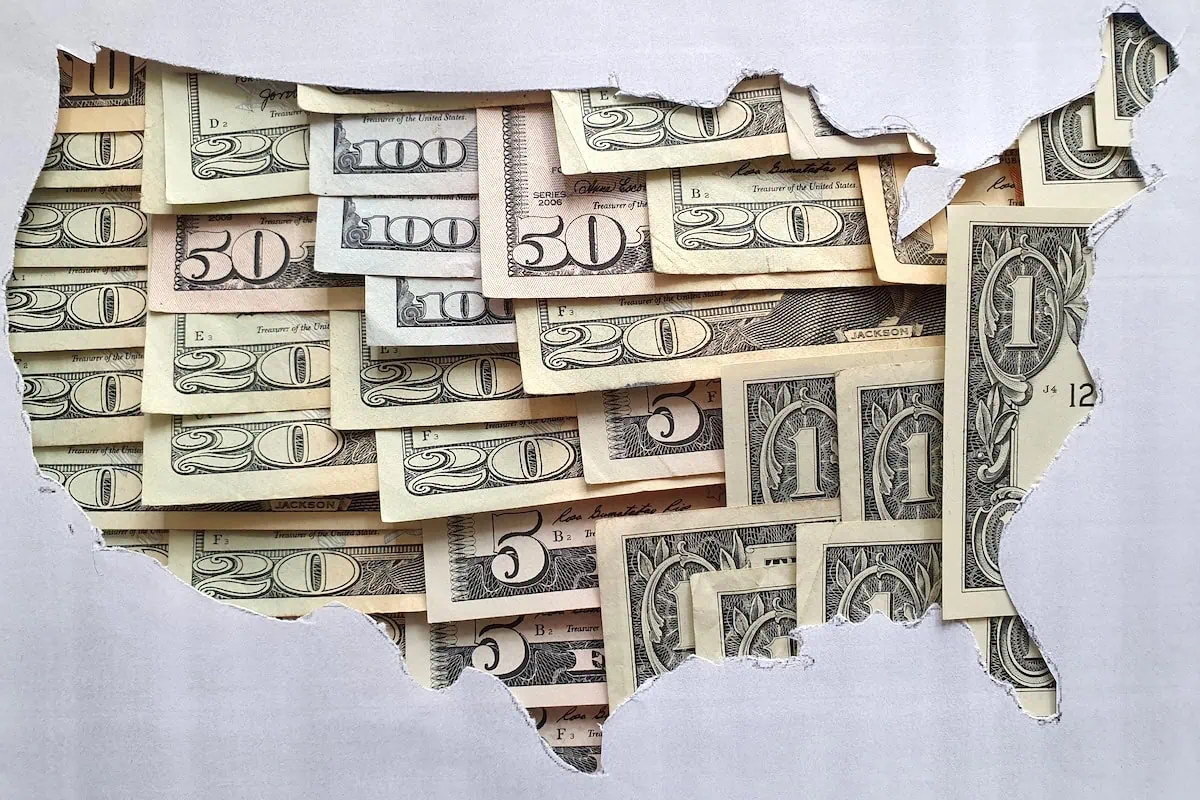
Donation data is usually a bit behind. Based on the most up-to-date data available, the most recent donations have been as follows
- October 2025: $23,873.88
- September 2025: $173,710.42
- August 2025: $88,745.81
- July 2025: $167,557.90
- June 2025: $43,238.42
- May 2025: $26,079.81
- April 2025: $173,632.81
- March 2025: $67,288.72
Have these donations made a significant dent in the debt?
Not quite. Again, based on November 2025’s national debt figure, the donations listed above would have offset only 0.000002% of America’s IOUs.
In other words: Donations are inconsequential … but yes, they are technically an option if you still have cash to blow.
Related: How Much Money Do You Need to Work With a Financial Advisor?