


It is a common question that many people ask themselves: how old do you have to be to get a credit card? The answer, much like the rules and regulations applied to minors and adults, can vary slightly depending on your financial institution.
However, to have a credit card issued in your name, you’ll need to be considered an adult in your state of residence. Often, that means being 18 or older. Though, this doesn’t mean you can’t have a credit card—you might just need to become an authorized user on an adult’s credit card account.
Below, we will discuss the minimum age requirements for receiving a credit card at some of the most popular banks in America as well as cover many other related topics and content.
Let’s jump in!
How Old Do You Have to Be to Get a Credit Card?

Getting a credit card in your own name requires you to be the age of majority in your state of residence. If, however, you don’t require the card to be held in your own name, you can qualify to have a card held by an adult, parent or guardian as an authorized user.
Several credit card issuers allow you to apply for a card as an adult with the intent of adding a child as an authorized user. Parents tend to do this for a number of reasons:
- First, credit card companies will often allow parents to add a child as an authorized user without having them provide any credit history. This is helpful for teens or young adults just starting out who don’t have a credit report yet.
- Secondly, it can be easier to build credit through piggybacking on someone else’s credit account rather than building credit on your own.
- Thirdly, authorized users aren’t responsible for paying off credit card purchases, though they can easily be removed from the account if necessary.
- Lastly, credit cards are often more of a convenience than an essential part of life—credit scores and credit reports don’t care how much you’re spending every month as long as you pay your credit card bill. Therefore, even if you add your kid as an authorized user but never give them a card, it can still help with building their credit.
Related: Best Credit Cards for Teenagers
What Is an Authorized User?
Because minors can’t have credit cards held directly in their names, if they need to have access to a credit card, that will require being added to a parent or guardian’s credit card as an authorized user.
An authorized user is a person who is permitted to use a credit card account, but isn’t the primary account holder.
This means that authorized users are not responsible for making monthly payments on their credit cards, nor do they have access to view billing statements or transaction history online.
What Credit Cards Can You Have as an Authorized User?
If you want to get a credit card for your child, you’ll need to have them become an authorized user on your own account. This will have your credit history reflect on your credit reports as well as your child’s credit reports.
You can select from one of several credit card issuer options with companies like Capital One, American Express, Discover, Chase Bank, Bank of America, Wells Fargo and many others.
You will likely receive credit offers in the mail and in your email inbox as your child nears their teen years or becomes a young adult.
This can be for things as simple as having a card for use at gas stations, buying products online while at school or even being in need of something like a student credit card.
All of these options can help with building credit and earning good marks on credit reports from the credit bureaus.
You’ll often find many have attractive features like:
- Intro APR
- Cash Back
- Balance Transfers
- Travel insurance
- Credit scores through the mobile app or online portal
- No income requirements
- No credit scores or credit report requirements
- Low credit limit options
- Co-signer availability (meaning someone equally responsible for the credit card bill and not just as an authorized user)
Do you want to get serious about saving and planning for retirement? Sign up for Retire With Riley, Young and the Invested’s free retirement planning newsletter.
What Is a Credit Card for a Child?

Why would you give a minor a credit card? Having a credit card for kids may assist them by developing healthy money habits from an early age, allowing these financial literacy skills to compound from the start.
And if you don’t provide them a credit card early on with training wheels firmly attached? While certainly not always the outcome you’d encounter, one of the most common mistakes encountered by young adults is accumulating costly credit card debt.
Depending on your circumstances as their family member, you might be able to manage assistance for when this happens. Though, to head this off at the pass, you want to share, practice and instill financial literacy skills with them as early as possible—before real money is at stake.
Kids can learn about money management through several means, though the best option is through modeled behavior. In other words, seeing you handle credit cards responsibly as an adult.
If not managed properly, credit cards can quickly spell disaster because they front a line of credit, offering buying power you might not necessarily have the means to afford.
Combine this lack of financial resources with a considerable marketing effort to attract young consumers and it spells disaster from which it could take years to recover.
Though, all this doom and gloom isn’t a certainty. In fact, a teen can learn how to manage money prudently, establish good credit habits and absorb useful financial literacy skills to navigate credit cards themselves—though they’ll need your help!
Credit cards present an opportunity for a kid or teen to access credit for the first time and begin building a credit history. Though, your best first step is through exploring a kids debit card first.
This keeps the training wheels firmly attached until they’ve shown enough responsibility to manage their own money prudently.
From there, it’s your responsibility to teach them how credit cards work, why having a credit card account is a good step toward financial security and demonstrate what they can do for credit score.
Let’s now talk about kids’ debit cards, how they allow you to establish important concepts like savings goals and what they entail.
What Is a Debit Card for Kids?

As we’ve discussed above, due to legal reasons tied to lack of capacity, minors do not have the ability to enter into legal contracts.
As a result, children can’t open their own bank account until they reach the age of majority in their state—often 18 years old.
Parents interested in offering their kids a bank account and paired debit card can still choose a number of possible paths:
1) Opening a sub account from their own bank account.
This can provide your kids with a card to use while you can maintain control over the account itself. Under this situation, it’s still likely that your child will need to be at least 13 years old before receiving a debit card.
However, these accounts may not come with the features you want for maintaining control over your child’s spending behaviors.
2) Opening a joint banking account.
Another option to consider includes opening a joint account with your kid or teen. This means you both have ownership over any joint accounts you share as well as the assets held inside them.
3) Opening a debit card for kids (and teens).
This route understands parents’ desires to teach their kids about money, while providing sufficient parental controls and oversight to make sure a child’s spending and money decisions are smart.
To accomplish this mission, debit cards for kids and teens offer parents custom spending controls, spending notifications, merchant blocking, daily and ATM spending limits, plus other controls enabled through feature-filled mobile apps.
Some new apps even allow you to lock the card or limit where your child spends money.
These cards also effectively function as a prepaid debit card for kids and teens because you can establish parental controls. Traditional banks or free debit cards might not allow you to do this beyond keeping the balance at a certain level.
Make Young and the Invested your preferred news source on Google
Simply go to your preferences page and select the ✓ box for Young and the Invested. Once you’ve made this update, you’ll see Young and the Invested show up more often in Google’s “Top Stories” feed, as well as in a dedicated “From Your Sources” section on Google’s search results page.
Best Credit Card Options for Kids and Teens

The most natural moment to place plastic in the hands of your children with their name on it is in high school when they’re beginning to develop independence, getting a driver’s license or spending time away from with friends.
You’ve got a number of different options to consider beyond simply having all your kid’s finances handled in cash. Below, we cover the most common ways to get your children equipped with a card.
Credit Card Authorized Users
Likewise, you can also add your kid as an authorized user to your own card or through a new one you set up together under your name through a credit card issuer.
Authorized users can also receive a card under your account from numerous credit card issuers. This will help parents begin to build credit history for their children.
Secured Credit Card
After they show enough responsibility and they turn 18, you can move on to a secured credit card under their own name.
Secured credit cards work by having the cardholder front a security deposit to open an account, reducing the risk to card issuers of you defaulting or missing a payment.
Usually, minimum deposits are in lower denominations, between $200 to $500 to start. This represents your credit limit.
Once you apply for a credit card and make the security deposit, these secured credit card options work like any other card.
Unlike prepaid cards, the security deposit funds don’t load onto your card and it is not directly used for purchases. Instead, this deposit will be forfeited if you fail to pay your credit card bill.
So, if you make your payments on time, your normal spending activity and collateral will help you to build your credit. With time, you may opt to move to unsecured credit card issuers’ options to provide you more financial flexibility.
Secured cards work best for people with no or bad credit.
Related: Best Credit Cards for Teenagers
Unsecured Credit Cards

If your kid has shown good money habits and you think they can handle a line of credit, you may want to start with an unsecured credit card.
You have several options like student credit cards, gas cards, or other low balance credit cards available from credit card issuers.
These are all great options if your children will attend college and need to get a credit card that works for expenses away from home.
Likewise, the unsecured card option works for young adults who work full-time and need a way to access credit while possibly earning rewards, cash back or other benefits that come from using unsecured credit cards.
You can apply for a card like the Petal One or Petal Two credit cards. These cards have low initial credit limit options, offer cash back and avoid annual fees—all features you should look for in a first card.
These types of credit cards can help with beginning to build a credit history. Further, if your children will have student loans, these will factor into their credit history and can build a credit profile for lenders to evaluate on future credit needs.
However, if you’d like the card to be under their own name and they are underage, they’ll need to look first at getting a prepaid debit card for kids and teens.
Prepaid Debit Cards for Kids

These cards come filled with features uniquely tailored toward helping parents assist, oversee and monitor their kids’ finances.
You can choose to start them off with debit cards for teens that withdraw money directly from the prepaid card balance or from the associated account.
These might be better than a credit card at first because a child will become familiar with the responsibility of carrying a card and not purchasing more than they can afford.
You can load it with weekly allowance payments, money from a summer or after-school job or even financial gifts they receive from friends and family.
Have a look below at some alternatives to credit cards for kids or adding them to one of your existing credit cards as an authorized user.
Related: Best Kid-Friendly Debit Cards
What are the Best Debit Cards for Kids and Teens?
We’ve compiled a list of the best debit cards for kids and teens that should work for your needs below. Look at each and compare which one makes the most sense for your needs.
1. Best Rated Overall: Greenlight
- Available: Sign up here
- Price: Greenlight Max: $9.98/mo. Greenlight Infinity: $14.98/mo.
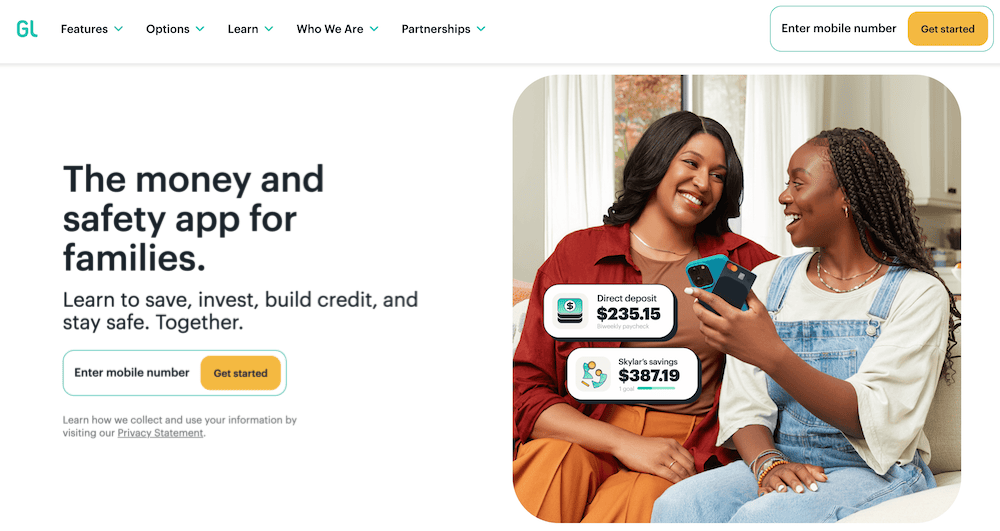
Greenlight, through its Max and Infinity tiers, is an investment account for kids that comes paired with a debit card and bank account.
It’s easy to use and can double as a savings account and banking apps for teens. The investing app will teach the basics of investing, how to invest in stocks and ETFs, and more.
It works best if parents are involved in the process because it requires linked brokerage accounts from custodian banks or brokerages.
The all-in-one plan teaches them important financial skills like money management and investing fundamentals—with real money, real stocks and real-life lessons.
You can use the investing feature to:
- Start investing with as little as $1 in your account
- Buy fractional shares of companies you admire (say, kid-friendly stocks)
- No trading commissions beyond the monthly subscription fee
- Teens can only invest in U.S.-listed stocks and ETFs that have either a market capitalization over $1 billion or a three-month average daily dollar volume of more than $500,000
- Parents must approve every trade directly in the app.
Each account supports up to five kids.
Consider opening a Greenlight Max or Infinity account to start investing in a joint investment account as a teenager today. Or, you can read more in our Greenlight Card review.
- Greenlight is a financial solution for kids that allows them to spend with a debit card, earn money on savings, and even invest their money.
- Greenlight offers flexible parental controls for each child and real-time notifications of each transaction. And it's the only debit card that lets you choose the exact stores where kids can spend on the card.
- Parents can use this app to teach kids how to invest with a brokerage account through Greenlight Max, Infinity, and Family Shield plans.
- Families can earn 2% (Core), 3% (Max), 5% (Infinity), or 6% (Family Shield) per annum on their average daily savings balance of up to $5,000 per family. Also, Max and Infinity families can earn 1% cash back on their monthly expenditures.
- Unlike many apps that simply provide features and controls, Greenlight is also designed to spark discussions with children about spending, investing, and more, fostering a better educational experience.
- Best-in-class parental controls (can prohibit specific stores)
- Can add brokerage account to invest in stocks
- Intuitive Parent + Kid apps
- Competitive cash back & interest rates
- Parent-Paid Interest
- High price points
- No cash reload options
- No parent / child lending

Related: 11 Best Allowance and Chore Apps for Kids [Easier Family Life]
2. Acorns Early (Best for Customer Service)
- Available: Acorns Early Lite | Acorns Gold
- Price: Acorns Early Lite: Free 30-day trial, then $8/mo. Acorns Early: $12/mo.
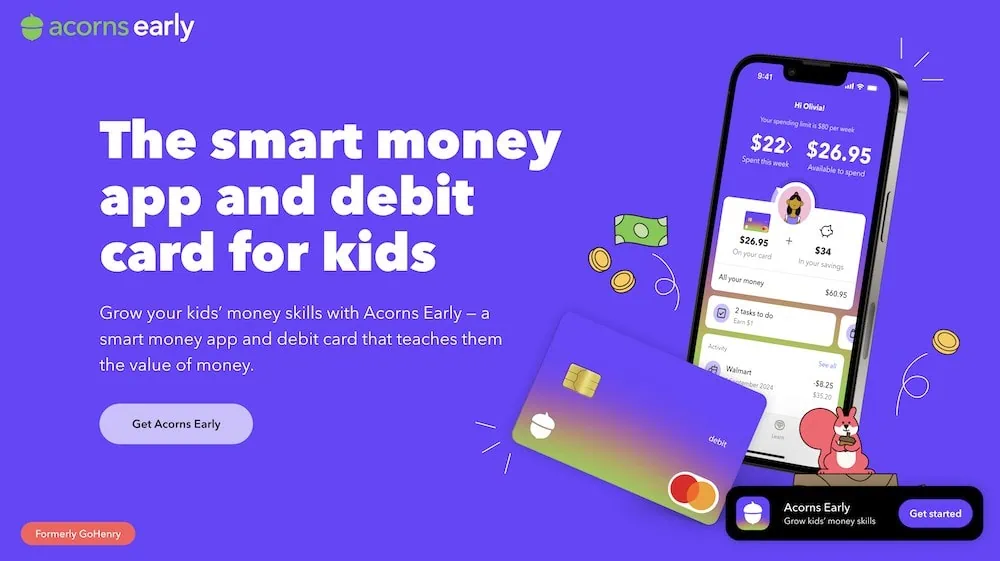
Many reviewers have long painted Acorns Early (formerly GoHenry) as just a way to spend. However, I see it as a real financial solution for minors—a debit card, yes, but also an app-based ecosphere that provides education and experience for the child, as well as ways for parents to keep their kids safe and teach them responsibility.
An Acorns Early account includes a smart money app, as well as Visa debit cards for up to four children. These debit cards can be used to spend anywhere Visa is accepted (so, millions of vendors online and in stores), as well as withdraw cash from ATMs. An Acorns Early account also allows kids to set savings goals, which they can fund manually or via autosave. And the app also hosts educational materials to help children and teens alike develop good money habits.
This FDIC-insured account also enjoys a variety of safety features, including chip and PIN protection, secure PIN recovery, and fraud protection. Acorns Early also offers parents additional peace of mind by providing a number of controls, including:
- Real-time spending notifications
- Card lock/unlock
- Savings goal lock/unlock
- Adjustable spending limits on a per-transaction and per-week basis
- Card category block/unblock for in-store purchases, online purchases, and ATM withdrawals
- Adjustable spending block/unblock at stores that sell age-restricted goods such as firearms and alcohol
Also, kids can only spend whatever money is available on the card because it’s a prepaid debit card. That means parents don’t have to worry about costly overdraft fees or their kids running up a debt.
Acorns Early also stands out to us as one of the best prepaid debit cards for kids because of its outstanding customer service, which it inherited from GoHenry. Acorns Early users enjoy seven-day-a-week phone service (9 a.m. to 8 p.m. ET Monday-Friday, 9 a.m. to 5 p.m. ET Saturday-Sunday), as well as 24/7 live chat support.
Acorns Early has no minimum age requirements but recommends starting at age 6 or older. Parents have two ways of signing up for Acorns Early:
- Sign up for Acorns Early Lite. This subscription level provides you with everything mentioned above.
- Sign up for Acorns Gold. Acorns Gold is the top Acorns subscription tier for adults, and it provides a wealth of banking, investing, and other features. However, it also includes a subscription to Acorns Early (again, good for up to four children), and it unlocks Acorns Early Invest: a UGMA/UTMA custodial account you can use to invest for your kids’ future.
Acorns frequently offers small bonuses for anyone who signs up with our links. You can check out current offers in the box below, or read more about this app in our Acorns Early review.
- Acorns allows you to sign up for investment, retirement, and checking accounts for you and your family, learn how to earn more money, and grow your investing knowledge.
- Famous for investing spare change automatically through Round-Ups, this all-in-one financial app helps younger generations start investing earlier.
- Invest in expert-built portfolios made up of diversified ETFs.
- Silver tier includes perks such as a 25% match on Acorns Earn rewards (up to $200/mo.), generous APYs on Checking and Emergency Fund, and live Q&As with investing experts.
- Gold tier includes perks such as a 50% match on Acorns Earn rewards (up to $200/mo.), $10,000 in life insurance, and picking individual stocks for your portfolio.
- Gold also comes with a free Acorns Early account for up to four children. It's also the only tier to offer Acorns Early Invest: a UGMA/UTMA custodial account where you can save toward your kids' future and get a 1% match on up to $7,000 in contributions annually.
- Earn even more with Later Match: Acorns will match up to 1% (Silver) or 3% (Gold) of all new IRA contributions in your first year.*
- Special offer: Get a free $20 bonus investment when you sign up with our link and start making recurring investments.**
- Robo-advisor with affordable fees (on larger portfolios)
- Fixed fee model
- Round-ups
- FDIC/SIPC insurance
- IRA match (Personal Plus and Premium)
- High fixed fees for small balances
- Limited investment selections
- Must subscribe to Premium for any self-directed investing options

Related: Acorns Early (Formerly GoHenry) vs. Greenlight
Related Questions on Credit Cards
Authorized Users vs Co-Signers
As we covered above, authorized users essentially have the primary cardholder’s card in their possession with permission to use the card. They can use the full credit limit and make purchases how they wish, leaving the primary cardholder to make credit card payments.
Authorized users differ from handing your children your credit card to use because a store could deny them from using your credit card. As an authorized user, they have legal authorization to use the card just as much as you.
A co-signer on the other hand deals with more than just trusting someone to use your credit line. A co-signer has legal exposure.
When a co-signer signs the dotted line on the application, they become equally liable for products and services purchased on the card. If the primary cardholder can’t make payments, the credit card issuer can come after you to collect what’s due.
If the co-signer fails to pay what their bill shows, this will impact their credit history and score.
Do you want to get serious about saving and planning for retirement? Sign up for Retire With Riley, Young and the Invested’s free retirement planning newsletter.
Do Debit Cards for Kids Help Build Credit?

Despite a prepaid debit card having the same look and feel of a regular credit card, these cards don’t tend to help to build your credit like a credit card can.
For an account to impact your credit score, it needs to count as a debt or liability. To build good credit, you need to make regular payments on these debts over long periods of time. This factor plays the biggest role in building your credit.
A prepaid debit card, on the other hand, works like a regular debit card where you load the card with money (or, in the case of a debit card issued by a banking app or institution, have a balance in your account) and draw on the funds when you make purchases.
You can use a prepaid card like a credit card, but it won’t necessarily build credit like a credit card. Some debit card options do offer the ability to run them as a credit card when processing payments, acting as a means for building credit history and your credit score.
Though, for most prepaid cards, because you don’t borrow money, the account doesn’t get reported to credit bureaus and therefore has no effect on your credit score.
Related: