


America gave the monarchy the big heave-ho roughly a quarter of a millennium ago, but we still reserve some reverence for one particular type of royalty.
No, not scandalous Brits. I’m talking about the Dividend Kings.
Wall Street’s Dividend Kings are an exclusive group of dividend stocks that have consistently increased their dividends for at least 50 consecutive years. That’s more than bragging rights—for investors, it exemplifies the remarkable benefits of long-term buy-and-hold dividend investing.
Sure, most Dividend Kings lack panache. They’re nothing to gab about at the water cooler. In truth, many of them operate in dull industries like consumer goods, industrials, and utilities. But seasoned investors will tell you that when it comes to dividends, boring is beautiful. And that makes the Dividend Kings downright gorgeous.
Today, I’ll introduce you to our freshly updated list of some of the most noteworthy Dividend Kings. These are companies with extremely long histories of financial resilience and shareholder-friendly management. And while some might have more enticing headline dividend yields at the moment, all of them have the potential to deliver higher “yields on cost”—the yield you enjoy at the price you bought in—over time if they maintain their storied dividend streaks.
Editor’s Note: Tabular data presented in this article is up-to-date as of May 19, 2026.
Featured Financial Products
Disclaimer: This article does not constitute individualized investment advice. Individual securities, funds, and/or other investments appear for your consideration and not as personalized investment recommendations. Act at your own discretion.
Table of Contents
What Is a Dividend King?

Technically, “Dividend Aristocrat” is a broad term for a publicly traded company that has a history of unwavering dividend growth. The exact qualifications for “Aristocracy” depends on the index.
For instance, the S&P 500 Dividend Aristocrats—who we usually mean when we refer to “Dividend Aristocrats” generally—have improved their distributions on an annual basis for at least 25 consecutive years. Others, such as high-yield Aristocrats or European Aristocrats, have different thresholds.
A Dividend King, however, is an especially prestigious title bestowed upon a select group of publicly traded companies that go above and beyond your average Aristocrat. Specifically, to earn the rank of Dividend King, a company must raise its annual dividend payout without interruption for at least 50 consecutive years.
Put more briefly: Dividend Kings are best-in-class dividend-growth stocks.
Young and the Invested Tip: Despite the already high barrier to entry of 50 years, several Dividend Kings boast several decades of consecutive dividend growth in excess of this lofty minimum.
Why Should You Buy Dividend Kings?
When you invest in a Dividend King, you’re purchasing a piece of a business that hasn’t just survived, but thrived, for several decades. They’ve navigated economic peaks and valleys, they’ve outlasted business disruptors, and they’ve either embraced or simply gotten the better of technological innovation. (After all, if they hadn’t, these companies wouldn’t have been able to finance their increasing dividends year in and year out.)
Just think about the events these firms have had to navigate successfully over the past 50 years: multiple wars, continued business disruption from technological advances, deep and shallow recessions alike, a global pandemic, and more.
Despite all that, they managed to keep fattening their dividends without so much as flinching.
Dividend Kings hold a particular appeal among investors who want to generate steady (and increasing) income over time. That’s because extended periods of dividend growth can lead to a much higher yield on the original investment—a concept known as “yield on cost.” We define and explain the concept in more detail at the end of this article, but in short, if you buy a stock that yields 2%, and it grows its dividend aggressively and for a long period of time, you might eventually be sitting on dividend yields of 6%, 8%, 10% … or even more!
If you’re looking for dividend stock ideas, read on as I discuss a specific set of Dividend Kings: those that are in the S&P 500. Eleven of these names are also officially part of the S&P 500 Dividend Aristocrats Index. The S&P 500 Dividend Aristocrats are blue-chip royalty—predominantly large-cap stocks that have upped the ante on their payouts yearly, unimpeded, for at least a quarter-century.
These Dividend Kings, then, are the longest-serving dividend-growth stocks you can find in the U.S. stock market.
15 of 2026’s Most Notable Dividend Kings
Here’s a look at 15 Dividend Kings within the S&P 500 Dividend Aristocrats—in other words, each of these 15 blue-chip stocks has improved upon its annual dividend once a year for at least half a century.
These stocks are listed by order of dividend streaks, from shortest to longest.
Related: 7 Best High-Yield Dividend ETFs for Income-Hungry Investors
15. Pentair (The Newest Dividend King)

- Sector: Industrials
- Market Cap: $11.7 billion
- Dividend yield: 1.4%
- Dividend-growth streak: 50 years
Pentair (PNR) is one of the world’s largest providers of water solutions, operating in five continents.
Related: 7 High-Quality, High-Yield Dividend Stocks
Its products include fluid treatment and pump products and systems, commercial and residential water treatment products and systems, and residential and commercial pool equipment and accessories. And its brand portfolio includes a wide variety of names, including Aurora, Haffmans, Hydromatic, Everpure, Pentek, Kreepy Krauly, Sta-Rite, among others, plus a few brands that utilize the Pentair name (Pentair Pool, Pentair Flow).
Like with many industrials, Pentair is a cyclical business whose top and bottom lines ebb and flow with the economy. That’s not a traditional recipe for even dividend stability, let alone unflinching growth, but Pentair has managed to do so with a tight grip on the wheel.
Related: Best Fidelity Retirement Funds for a 401(k) Plan
Pentair joins the Dividend Kings by virtue of its 50th consecutive dividend increase, which came in December 2025. PNR raised its payout by 8%, to 27¢ per share. That comes out to only 20% of the company’s expected earnings for 2026, which is an extremely conservative payout ratio that could survive a massive fluctuation in business conditions.
Also worth mentioning is that alongside the upgraded dividend, Pentair also announced a new $1 billion share-repurchase program that’s expected to run through the end of 2028.
Do you want to get serious about saving and planning for retirement? Sign up for Retire With Riley, Young and the Invested’s free retirement planning newsletter.
14. Abbott Laboratories
- Sector: Healthcare
- Market value: $154.8 billion
- Dividend yield: 3.3%
- Dividend-growth streak: 54 years
Abbott Laboratories (ABT), founded by a drugstore owner more than 125 years ago, is a mega-cap multinational healthcare firm that develops makes, and sells medical devices, diagnostic products, nutritional products, and generic pharmaceuticals.
Among other things, it’s responsible for FreeStyle (and FreeStyle Libre) glucose monitors, Pedialyte hydration products, Similac formulas, PediaSure children’s nutritional products, and BinaxNow COVID-19 antigen tests. It’s also the owner of Cologuard screening tests following the March 2026 closure of its acquisition of Exact Sciences.
Medical devices are Abbott’s biggest breadwinner at nearly half of revenues, and they’ve been a key driver of growth of late, especially in the cardiovascular and diabetes care segments.
Related: 7 Best Closed-End Funds (CEFs) Paying Us Up to 15.2%
Healthcare has traditionally been a defensive, counter-cyclical sector, but it hasn’t been living up to billing of late. ABT shares in particular have been struggling thanks to myriad factors, including a weak flu season and concerns about the Exact Sciences deal. But there should be little worry over the company’s dividend, which accounts for less than half of this year’s expected earnings.
That dividend has been growing for 54 years without interruption. The most recent increase to the quarterly payout—a 7% hike to 63¢ per share—was announced in December 2025. The distribution itself dates back more than a century, to 1924.
Related: 7 Best Stock Advisor Websites & Services to Seize Alpha
13. AbbVie
- Sector: Healthcare
- Market value: $380.6 billion
- Dividend yield: 0.8%
- Dividend-growth streak: 54 years
If AbbVie (ABBV) has a familiar ring to it, that’s because it shares a heritage with the aforementioned Abbott Laboratories. Specifically, ABT spun off its biopharmaceutical arm in 2013, creating a standalone unit that today is worth more than double its separated parent.
AbbVie has a wide and deep lineup. It was once best known for Humira, which treats a variety of inflammatory conditions in adults, but the loss of patent exclusivity a few years back forced the company to look elsewhere for growth. Its blockbusters today include Skyrizi (autoimmune diseases) and Rinvoq (inflammatory diseases).
Related: The 10 Best Dividend ETFs [Get Income + Diversify]
The company also has several cancer drugs including Imbruvia, Venclexta, and Elahere. Its other medicines treat everything from schizophrenia and bipolar disorder to Parkinson’s and migraines. AbbVie is also in the eye-care business, producing Refresh/Optive, Durysta, and Restasis, and it even offers cosmetic therapies for crow’s feet, forehead lines, and facial volume loss.
When Abbott spun off AbbVie more than a decade ago, both companies retained credit for the long-term dividend streak qualifying them for Dividend Aristocrat status. Both continued to raise their dividends and have since joined the ranks of the Dividend Kings. AbbVie, like Abbott, has 54 years of consecutive dividend increases under its belt. The latest came in January 2026, when the company announced a 5.5% improvement to $1.73 per share quarterly—a healthy coverage ratio of less than half this year’s estimated earnings.
Make Young and the Invested your preferred news source on Google
Simply go to your preferences page and select the ✓ box for Young and the Invested. Once you’ve made this update, you’ll see Young and the Invested show up more often in Google’s “Top Stories” feed, as well as in a dedicated “From Your Sources” section on Google’s search results page.
12. Federal Realty Investment Trust

- Sector: Real estate
- Market value: $9.6 billion
- Dividend yield: 4.0%
- Dividend-growth streak: 58 years
Federal Realty Investment Trust (FRT) has a special place among the Dividend Kings, as it’s the only real estate investment trust (REIT) to have reached the 50-year threshold.
Which is funny, because dividends are part and parcel of the REIT business structure.
Real estate investment trusts are companies that own (and sometimes operate) real estate. Congress brought them to life decades ago—through the REIT Act, which was part of the Cigar Excise Tax Extension of 1960, signed into law by President Dwight D. Eisenhower—to widen access to real estate investing. Importantly, REITs enjoy an exemption from U.S. federal income taxes … in exchange for paying out at least 90% of their taxable income as dividends to their shareholders.
Related: 7 Best Vanguard Dividend Funds [Low-Cost Income]
REITs can and do own a wide variety of properties, from apartment and office buildings to hotels and hospitals. Federal Realty Investment Trust specializes in mixed-use (commercial and residential) properties and open-air shopping centers. Its 104 properties represent 29 million square feet of commercial space (which it leases out to about 3,800 tenants) and about 2,500 residential units. Its real estate sits predominantly in “first-ring” suburban locations—areas that are closest to the metropolitan area and typically densely populated.
Federal Realty Investment Trust’s dividend streak of 58 years is the longest of any REIT. It recently extended its run with a decent 3% improvement to $1.13 per share, which it announced in August 2025.
As far as payout coverage is concerned, we want to focus not on profits, but “funds from operations” (FFO), a non-generally accepted accounting principles (GAAP) metric that helps gauge REITs’ profitability and ability to fund the dividend. FRT’s current payout is about 60% of 2026 FFO estimates, which is extremely sustainable.
Related: The 16 Best ETFs to Buy Right Now
Featured Financial Products
11. Hormel Foods
- Sector: Consumer staples
- Market value: $11.2 billion
- Dividend yield: 5.9%
- Dividend-growth streak: 60 years
The mere mention of “Spam” might get you a side eye in hifalutin circles, but even those well-versed in haute cuisine can appreciate the income potential of Hormel Foods (HRL). Hormel, one of the most recognizable consumer companies on this list, is responsible for a host of brands, including Spam, Skippy peanut butter, Jennie-O turkey, Dinty Moore stews, its namesake bacon and chili, and dozens more.
Founded in 1891 and headquartered in Austin, Minnesota, Hormel has grown into a global brand. Yes, it’s not just a U.S. consumer staples giant, but a mainstay in grocery stores in roughly 80 countries worldwide.
Related: The Best Dividend Stocks: 10 Pro-Grade Income Picks for 2026
Product diversification has been crucial in Hormel’s ability to maintain steady demand and navigate the dynamic food market, which is known for rapidly changing consumer tastes and preferences. That has translated into shareholder value, with the company paying and increasing its dividend for 60 consecutive years.
I mentioned throughout 2025 that Hormel maintained a roughly 80% payout ratio on 2026’s earnings estimates, which is manageable but only leaves room for modest dividend growth going forward. Well, its most recent increase, which was announced in December, was indeed modest, at just 1% to 29.25¢ per share. Regardless, that was good enough to extend Hormel’s streak to a full six decades’ worth of uninterrupted dividend growth.
Make sure you sign up for The Weekend Tea, Young and the Invested’s free weekly newsletter that over 10k monthly readers use to level up their money know-how.
10. Illinois Tool Works
- Sector: Industrials
- Market value: $71.4 billion
- Dividend yield: 2.6%
- Dividend-growth streak: 62 years
Illinois Tool Works (ITW) might sound like your local hardware shop, but it’s a multinational industrial manufacturer operating in 51 countries. Its business lines span construction, welding, food equipment, automotive OEM, test, measurement, and specialty products, as well as polymers and fluids.
Like most industrial names, Illinois Tool Works’ business is cyclical in nature. But its wide and diverse product offerings make it at least somewhat defensive compared to its peers. An eye toward innovation helps. ITW already boasts close to 21,000 granted and pending patents, and that should only grow amid the company’s latest strategic initiative: solving problems its customers are experiencing in their work environments.
The business might be cyclical in nature, but ITW’s dividend history is as kingly as any tried-and-true defensive name. The company has been paying dividends since 1933, and it has been raising them on an annual basis for more than six decades. And it’s still doing so at a healthy pace—ITW’s 62nd consecutive hike, announced in August 2025, was a 7.3% improvement to $1.61 per share quarterly.
That’s a little more than 55% of analysts’ estimates for 2026 earnings, which is a generally sustainable level. Importantly: ITW is a cyclical company, so it must leave more breathing room than, say, staples and utilities in the event that a downturn in the economy significantly impacts its profits (and thus its ability to keep paying the dividend), even if just in the short-term.
Related: The 13 Best Mutual Funds You Can Buy for 2026
9. Nordson

- Sector: Industrials
- Market value: $15.2 billion
- Dividend yield: 1.2%
- Dividend-growth streak: 62 years
Nordson (NDSN) might not grab headlines like some of the more glamorous tech stocks or consumer brands, and its smaller market capitalization might keep it off the media’s radar.
But its six decades of dividend growth make it a rock star among income investors—and qualify it for inclusion on this Dividend Kings list.
Related: 5 Best Energy ETFs for the Rise of Oil, Natural Gas + More
Based in Westlake, Ohio, Nordson has carved out a niche in engineering, manufacturing, and marketing differentiated products used for dispensing adhesives, coatings, sealants, biomaterials and other materials; for fluid management; for test and inspection; and for UV curing and plasma surface treatment. It boasts more than 70 years of operation and has a presence in nearly 40 countries.
In August 2025, the company raised its payout by a little more than 5%, to 82¢ per share quarterly, marking 62 consecutive years of dividend increases. This achievement places Nordson in an elite group of stocks known for long-term, reliable dividend growth. A payout ratio sitting at less than 30% of 2026 profit estimates should give NDSN plenty of runway for future hikes.
Related: The 10 Best Index Funds You Can Buy for 2026
8. Colgate-Palmolive
- Sector: Consumer staples
- Market value: $72.0 billion
- Dividend yield: 2.4%
- Dividend-growth streak: 63 years
Colgate-Palmolive (CL) is another consumer staples giant among the ranks of the Dividend Kings.
Founded in 1806 and headquartered in New York City, Colgate-Palmolive has built a global empire in oral care, personal care, home care, and pet nutrition. The company’s extensive product portfolio—featuring not just its namesake brands, but also Hill’s Pet Nutrition, Speed Stick deodorants, Irish Spring soaps, and Tom’s of Maine natural care products, among others—caters to everyday consumer needs, ensuring persistent demand and financial stability.
Related: 9 Best Fidelity Retirement Funds [Low-Cost + Long-Term]
That stability has filtered through to shareholders via a longtime dividend. CL started paying dividends more than a century ago, when Grover Cleveland was serving his second term as president. And it has improved that payout without interruption for 62 consecutive years.
Colgate’s most recent distribution increase was a 2% bump announced in March 2026, to 53¢ per share. That’s roughly 55% of analysts’ profit expectations for 2026, making the dividend look both durable and primed for future growth.
Related: 13 Best Stock Screeners + Stock Scanners
7. Johnson & Johnson
- Sector: Healthcare
- Market value: $554.3 billion
- Dividend yield: 2.3%
- Dividend-growth streak: 64 years
The best dividend stocks are, to cite an old saying, “widow-and-orphan” investments. That’s because the income they pay is considered so safe, they’d be appropriate even for society’s most vulnerable members: widows and orphans.
Johnson & Johnson (JNJ) is a prime example. It is among the 25 largest companies on Wall Street, with a massive brand and more than 135 years of operations.
It was long a consumer-health giant, but in 2023, JNJ spun off those operations—which included the likes of Tylenol and Band-Aid—into Kenvue (KVUE), which also adopts its dividend-growth streak. But while that modestly reduced the overall footprint of the company, it also sharpened its focus on high-margin drugs (including its Janssen Pharmaceuticals arm) and medical devices to ensure future success. Now, the top and bottom lines are driven by products such as inflammation treatment Stelara, multiple myeloma drug Darzalex, and medical technologies such as electrophysiology, biosurgery, and wound closure products.
Related: The 7 Best Fidelity Index Funds for Beginners
JNJ is deeply embedded in the healthcare system and a top dividend stock that income investors can rely on through any market environment.
From a dividend perspective, the healthcare giant has raised its payouts for 64 years running, including a 3% upgrade announced in April 2026, to $1.34 per share. But it still has a payout ratio of just 45%, hinting there’s ample headroom for future increases, too.
Johnson & Johnson is also one of the most credit-worthy companies in the world, ranking as one of just two U.S. companies with a top AAA rating for its corporate debt. Microsoft (MSFT) is the other, if you’re curious. Indeed, following America’s recent credit downgrade by Moody’s, JNJ and MSFT now boast higher debt ratings than the U.S. government across all three of the major debt ratings agencies.
Related: Best Vanguard Retirement Funds for a 401(k) Plan
6. Lowe’s
- Sector: Consumer discretionary
- Market value: $24.2 billion
- Dividend yield: 2.2%
- Dividend-growth streak: 64 years
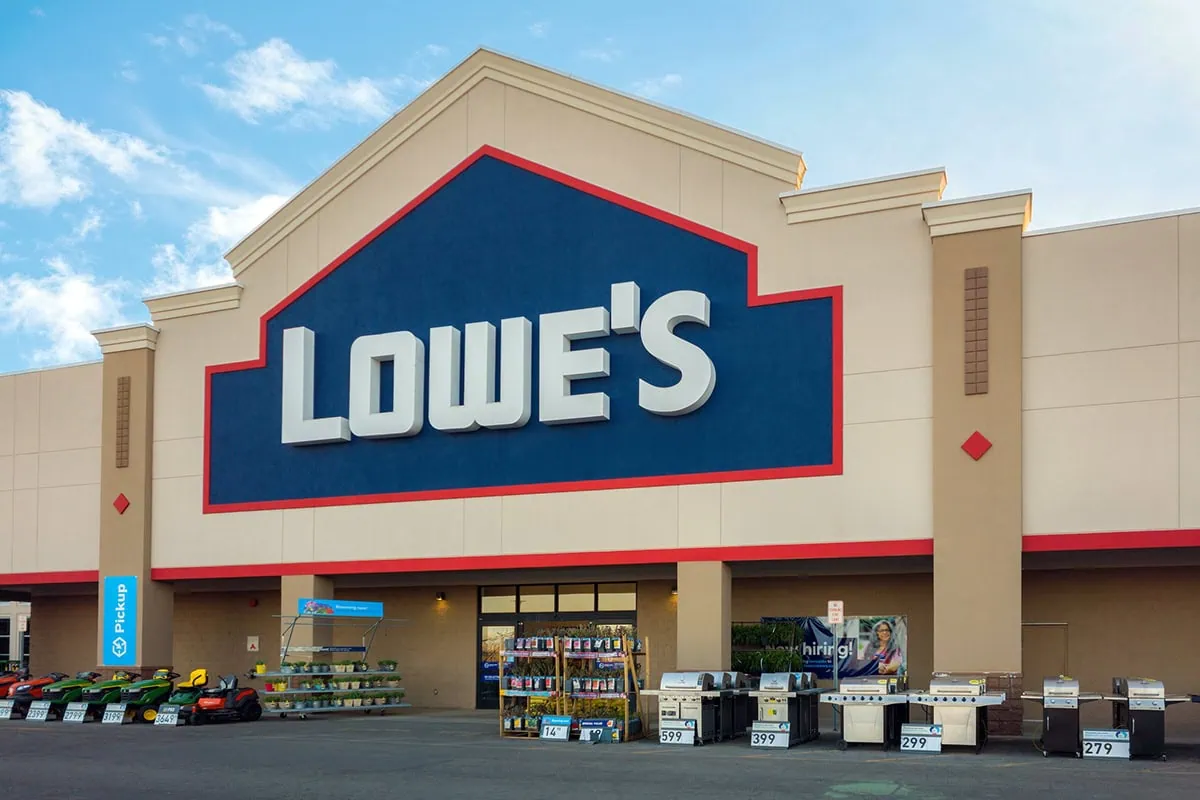
Lowe’s (LOW) is a home improvement retailer that sells products for construction, maintenance, repair, remodeling, and decorating across more than 1,700 stores in the U.S. It’s the second largest such retailer, behind only longtime rival Home Depot (HD).
Most people are familiar with its wide variety of consumer-facing products, including appliances, hardware, tools, lumber, lawn and garden, kitchens and bath, plumbing, and outdoor living, as well as its installation services. However, Lowe’s also provides homebuilders and property managers with design, distribution, and installation services for interior surface finishes. And while many of the products on its shelves come from well-known name-brand manufacturers, the company also sells private-brand products to retail and professional customers.
Related: 8 Best Stock Picking Services, Subscriptions & Sites
Its CEO, Marvin Ellison, previously worked at Home Depot in various senior-level roles, and his most notable contribution was improving customer service and efficiency simultaneously across the chain. Unsurprisingly, both have come into focus at Lowe’s; since coming on board in 2018, Ellison has sold off the Canadian business,= and improved the company’s business analytics. “Investors who are familiar with Mr. Ellison’s playbook at Home Depot will not be surprised that Lowe’s has reallocated store payroll to emphasize customer service rather than administrative tasks,” Argus Research analyst Christopher Graja adds.
This is another highly cyclical company that’s tightly tethered to not just the broader economy, but also the housing market. But management has been a good, conservative steward of the dividend, compiling a 64-year payout growth streak while keeping its cash distribution well-covered. The Dividend King’s last dividend hike—a 4% raise in May 2025—brought the payout to $1.20 per share, which is less than 40% of what Lowe’s expects to earn in 2026.
Related: 9 Best Vanguard Retirement Funds [Save More in 2026]
5. Coca-Cola
- Sector: Consumer staples
- Market value: $354.1 billion
- Dividend yield: 2.6%
- Dividend-growth streak: 64 years
In case you haven’t noticed by now, consumer staples stocks feature prominently among the Dividend Kings.
Consumer staples stocks—companies that make goods considered to be basic necessities—are as resilient as they come. That’s because when times get tough, households might spend less on vacations and designer jeans, but they’re not going to stop going to the grocery store. (That’s why staples make for some of the best dividend stocks for beginners, too.)
The next consumer staples name on our list is Atlanta-based beverage titan Coca-Cola (KO), which has more than 130 years of operating history and currently serves up more than 200 brands to more than 200 countries and territories.
Related: 13 Best Stock & Investment Newsletters for Inbox Alpha [2026]
Sugary soft drinks might not be a growth business in an age of healthier living, but Coca-Cola products still enjoy strong baseline demand. Plus, this mega-cap powerhouse is more than just Coke. Coca-Cola boasts a wide variety of other beverage brands, including Vitaminwater and Dasani water, Fuze teas, Powerade sports drinks, Minute Maid juices, Costa Coffee, and many more.
KO announced a 4% hike to its payout, to 53¢ per share, in February 2026, marking its 64th consecutive annual dividend increase. That long-standing and long-growing dividend is why Coca-Cola’s shares have so much institutional demand, including a massive stake held by Berkshire Hathaway (BRK.B). The holding company founded by Warren Buffett is KO’s largest shareholder, at more than 9% of the company’s shares—a strong foundation for share prices, as well as a mandate for consistent and generous dividends.
The dividend appears to be quite safe, as well, representing about two-thirds of Coca-Cola’s projected 2026 earnings.
Do you want to get serious about saving and planning for retirement? Sign up for Retire With Riley, Young and the Invested’s free retirement planning newsletter.
4. Parker-Hannifin
- Sector: Industrials
- Market value: $106.4 billion
- Dividend yield: 0.9%
- Dividend-growth streak: 70 years
Only a handful of Dividend Kings boast streaks of 70 years or more, the newest of which is Cleveland-based industrial firm Parker-Hannifin (PH).
Parker-Hannifin is a multinational specialist in motion and control technologies that operates in two segments: Aerospace Systems and Diversified Industrial. Its aerospace and defense products include avionics, electric power, engine exhaust systems, flight control systems, hydraulic valves, pneumatics, and more. And just a few of its diversified industrial offerings include coatings, sealing, fittings, HVAC/R controls, electric and hydraulic pumps and motors, and high-pressure connectors.
Related: 7 Best Fidelity Retirement Funds for an IRA
It’s another cyclical company, but one that has managed to produce outsized growth for decades on end. But it has managed to improve its stability by focusing more on aerospace, as well as other longer-cycle industries such as clean technology, digitization, and electrification.
It also doesn’t overleverage itself for the sake of its dividend. Parker-Hannifin hit 70 years of distribution growth in April, when it announced an 11% hike to $2 per share quarterly. That represents less than 40% of analysts’ expectations for 2026 earnings, giving the company plenty of room to keep extending its top-tier streak.
Featured Financial Products
Related: What Is an IRA and How Does it Work? [IRA for Dummies]
3. Procter & Gamble
- Sector: Consumer staples
- Market value: $330.4 billion
- Dividend yield: 3.1%
- Dividend-growth streak: 70 years
Procter & Gamble (PG) joined the 70-year club just a couple weeks prior to Parker-Hannifin.
In economic downturns, people might cut back on discretionary spending—but just like with food, they’ll also be slow to reduce spending in other consumer necessities like the household and personal-care products sold by Procter & Gamble, one of the oldest Dividend Kings.
Headquartered in Cincinnati, Procter & Gamble boasts a rich history dating back to 1837, when William Procter (a candle maker) joined forces with his brother-in-law, James Gamble (a soap maker). Now, with its global presence in over 180 countries, PG has become synonymous with essential consumer goods.
Related: 3 Best Preferred Stock ETFs to Buy [High Income From ‘Hybrids’]
The company’s portfolio spans numerous categories, including Tide, Gain, Downy, Cheer, and Bounce laundry products; Gillette razors; Bounty paper towels; Charmin toilet paper; Pampers and Luvs baby products; and so much more. This diversification across everyday products provides steady demand, insulating P&G from volatility. Plus, these durable brands offer consistent pricing power, keeping consumers loyal even during periods of rising costs. This offers the company a superior moat (insulation from competitors).
Procter & Gamble also has an illustrious dividend history, boasting 136 consecutive years of paying dividends. It also joined the 70-year dividend-growth club in April 2026, when it hiked its distribution by 3% to $1.0885 per share quarterly. Its stability and dividend reliability (the distribution accounts for less than 65% of 2026 profit estimates) make PG one of the top choices for investors seeking steady, long-term dividend income.
2. Genuine Parts
- Sector: Consumer discretionary
- Market value: $12.6 billion
- Dividend yield: 4.6%
- Dividend-growth streak: 70 years
Genuine Parts (GPC) might be considered a consumer discretionary stock, but given that it deals in automotive and industrial parts, much of what it sells is downright essential—and its dividend track record reflects that.
Established in 1928 and headquartered in Atlanta, GPC has carved a niche for itself as a premier distributor of automotive replacement parts, industrial parts, and business products. Its automotive segment (roughly two-thirds of revenues) predominantly come from large auto-care chains and local repair shops, though a little less than a quarter come from individual consumers. And its industrial segment (roughly one-third of revenues) sells directly to companies with large fleets.
Related: 5 Best Tech Dividend Stocks [According to the Pros]
Key to the company’s enduring success has been its extensive network of distribution centers and stores, including the well-known NAPA Auto Parts brand. This long reach has ensured a steady demand for its products, which is helpful in the often cyclical automotive and industrial sectors.
Genuine Parts Company’s investor appeal is significantly bolstered by its impressive record of dividend payments. The company has paid dividends without interruption for 76 years, and it has increased those distributions annually for 70 consecutive years to earn its Dividend King membership card. It reached a full seven decades in February 2026, when GPC upped its dividend by 3% to $1.0625 per share quarterly—about half the profits it’s expected to bring in during 2026.
Related: 9 Best Schwab ETFs to Buy [Build Your Core for Cheap]
1. Dover
- Sector: Industrials
- Market value: $28.1 billion
- Dividend yield: 1.0%
- Dividend-growth streak: 70 years
Established in 1955 and headquartered in Downers Grove, Illinois, Dover (DOV) is a diversified global manufacturer, providing innovative equipment, components, and services across multiple industries, including energy, engineered systems, fluids, and refrigeration and food equipment.
The company’s strategic approach to diversification and its focus on industrial innovation have been central to its enduring financial performance. Dover provides everything from radio frequency and microwave filters for defense and aerospace firms to trash compactors and recycling balers. This wide variety of competencies has helped Dover weather the ups and downs of the competitive, cyclical industrial manufacturing industry.
Related: How to Get Free Stocks for Signing Up: 9 Apps w/Free Shares
Dover has a long and storied history of consistent dividend payments that includes a seven-decade streak of annual payout increases, making it the S&P 500’s longest-paying Aristocrat and King.
DOV’s past few dividend bumps admittedly have been small—increases of roughly 1%, including a half-cent uptick announced in August 2025 to 52¢ per share quarterly. Still, Dover maintains an extremely conservative payout ratio that’s currently just 20% of estimated 2026 earnings, ensuring that rain or shine, the company should be able to afford its dividend while reinvesting most of its profits back into the business.
Related: Nvidia (NVDA) FY2027 Q1 Earnings Preview: 3 Expert Takes
Featured Financial Products
What Is a Dividend Stock?
A dividend is a cash payment from a company to shareholders. Companies that regularly provide these cash payments are referred to as dividend stocks.
Often, investors favor dividend-paying stocks because, to regularly pay out those dividends, they have to generate consistent and significant profits—a good sign that the company is financially healthy and well-managed.
Investors also love dividends because they’re an additional source of returns. Stock prices simply don’t go up in a straight line over time; dividends can help smooth out periods of weak performance, and bolster periods of stronger price performance.
Do you want to get serious about saving and planning for retirement? Sign up for Retire With Riley, Young and the Invested’s free retirement planning newsletter.
What Is Dividend Yield?

Perhaps the most important metric in this universe is known as dividend yield. This is a simple financial ratio that tells you the percentage of a company’s share price that is paid out across a year’s worth of dividend distributions.
Expressed as a mathematical equation, it’s simply:
Dividend yield = annual dividend / price x 100
The idea here is to normalize dividend payments regardless of stock price, different quarterly payments, even different payment frequencies (like monthly or annually). For instance, each of the following fictional stocks all have a dividend yield of 2.5%:
- Alpha Corp. currently trades for $40 a share. It pays a 25-cent quarterly dividend, for $1.00 per year in full. ($1 / $40 x 100 = 2.5%)
- Beta Inc. pays $1 in the first quarter, $2 in Q2, $3 in Q3 and $4 in Q4. That’s $10 in dividends for the full year. It trades for $400 a share. ($10 / $400 x 100 = 2.5%)
- Gamma Ltd. pays $2.50 just once per year. It trades for $100 a share. ($2.50 / $100 x 100 = 2.5%)
The idea is to focus on the percent of your initial investment you get back, and help you compare apples to apples.
What Is a Payout Ratio?
As with dividend yield, it’s important to normalize the dividend payout ratio for a stock. This is simply the percentage of a company’s earnings per share that is being distributed via dividends. It’s calculated as:
Payout ratio = dividends per share / earnings per share x 100
As an example, a stock that makes $100 million in profits and has 10 million shares of public stock has $10 in earnings per share. And if that company pays $5 annually in dividends, it has a payout ratio of 50% ($5 / $10 x 100 = 50%).
Related: The 7 Best Index Funds for Beginners
What Is Yield on Cost?
When you look up a stock’s information, the dividend yield listed is based on the most recent dividend and the current stock price.
That yield is often actually different than the one current shareholders enjoy. That yield is called “yield on cost,” which is the payout based on what you paid, at the moment you invested.
Let’s say you buy a stock at $100, and it pays $1 per share. It yields 1.0% when you buy it ($1 / $100 x 100 = 1.0%).
In a year, that stock has doubled to $200 per share, and it also doubled its dividend to $2 per share. If you look up its information, its dividend is still 1.0% ($2 / $200 x 100 = 1.0%).
That’s not your yield on cost, however. You’re still receiving that higher dividend of $2 per share. But your cost basis is still the original $100 you bought the share at. So now, your yield on cost has doubled, to 2.0% ($2 / $100 * 100 = 2.0%)!
Related: Best Vanguard Retirement Funds for an IRA
Want to talk more about your financial goals or concerns? Our services include comprehensive financial planning, investment management, estate planning, taxes, and more! Schedule a call with Riley to discuss what you need, and what we can do for you.

Related: The 12 Best Vanguard ETFs You Can Buy
Vanguard’s exchange-traded funds (ETFs) are among the most popular funds out there thanks to their low fees. But there’s more appeal to their ETF lineup than low costs alone.
Vanguard ETFs are big, liquid, and tend to track well-constructed indexes, meaning you’re not just paying low expenses … you’re actually getting some value out of your fees. And these Vanguard ETFs represent the best of the best.
Related: 10 Dividend Stocks That Pay Us Each and Every Month
The vast majority of American dividend stocks pay regular, reliable payouts—and they do so at a more frequent clip (quarterly) than dividend stocks in most other countries (typically every six months or year).
Still, if you’ve ever thought to yourself, “it’d sure be nice to collect these dividends more often,” you don’t have to look far. While they’re not terribly common, American exchanges boast dozens of monthly dividend stocks.
Please Heart ❤️, Follow and Subscribe
Did you find this article helpful?
1. Click the Heart Button.
2. Follow WealthUpdate —-> https://flipboard.com/@WealthUpdate
3. Subscribe to Retire With Riley, our free weekly retirement planning newsletter.