




The index fund made its claim to fame for triggering a decades-long, industry-wide decline in investment-fund fees. The logic is pretty straightforward: You’re paying a lot less for management when “management” is a largely algorithm-based system rather than a team of humans researching and picking stocks.
But if index funds were merely cheap, they wouldn’t have much allure.
We love index funds because many of them are simply better than the competition. The S&P 500 might be ubiquitous because it’s a fitting representation of the U.S. economy, but it also churns out better returns year in and year out than human managers can muster.
While most people equate index funds and exchange-traded funds (ETFs), they’re not the same thing. You can get indexed mutual funds, and they can be every bit as inexpensive as equivalent ETF products. So if you’re dealing with an account in which you have the option to own mutual funds (or if you’re working with a 401(k) in which they’re the only option), it’s helpful to be aware of some of the best index mutual funds in the space.
Today, I’m going to highlight a trio of my favorite indexed mutual funds—two equity products and a bond fund—covering three distinct strategies.
Editor’s Note: The tabular data appearing in this article is up-to-date as of March 18, 2026.
Disclaimer: This article does not constitute individualized investment advice. Individual securities, funds, and/or other investments appear for your consideration and not as personalized investment recommendations. Act at your own discretion.
How I Selected These Funds

I start virtually every review of investment funds by booting up Morningstar Investor and running a quality screen I customize for each article.
If you’re newer to investing: There are plenty of great investment analysis sites out there, but nothing beats Morningstar for information about (and analysis of) mutual funds and ETFs. I use my Morningstar Investor subscription to screen for funds that meet certain quality, price and other criteria for my articles, though investors can also use it to track their portfolio, build watchlists, look at charts and more. (And if you’re curious about Morningstar Investor, read to the end.)
Here’s a look at the criteria I used to narrow my search:
1. Index funds with a Gold Morningstar Medalist rating. Morningstar has two ratings systems—the Star ratings and the Medalist ratings. The latter are a forward-looking analytical view of a fund. Per Morningstar:
“For actively managed funds, the top three ratings of Gold, Silver, and Bronze all indicate that our analysts expect the rated investment vehicle to produce positive alpha relative to its Morningstar Category index over the long term, meaning a period of at least five years. For passive strategies, the same ratings indicate that we expect the fund to deliver alpha relative to its Morningstar Category index that is above the lesser of the category median or zero over the long term.”
A Medalist rating doesn’t mean Morningstar is necessarily bullish on the underlying asset class or categorization. It’s merely an expression of confidence in the fund compared to its peers.
2. No loads. In addition to annual expenses, some funds charge additional fees, including “loads.” For instance, if you invested $10,000 in a mutual fund with a 5% front-end load, the mutual fund company would immediately take $500 out in fees. So, you’d already be starting behind the 8-ball, investing just $9,500 to start with. The funds here have no sales charges.
3. Reasonable investment minimums. The maximum investment minimum for inclusion is $3,000, which is the common investment minimum for Vanguard funds. But most of the remaining funds on this list have either no minimum requirement, or a minimum of just $1. Also, some fund providers explicitly lay out lower investment minimums for specific retirement plans, such as individual retirement accounts (IRAs).
4. Broad availability: Mutual funds commonly have several share classes, many of which are limited to certain types of accounts, like, say, only for 401(k)s or only for wealth management clients. All of the index funds listed here are Investor-class or similar shares that are generally considered to be widely available to retail investors.
3 of My Favorite Index Funds
From the much more manageable resulting list, I’ve selected a group of index funds that provide a wide array of core and tactical strategies, ensuring there’s at least one fund, if not many funds, for just about everyone.
Let’s take a look at the list!
(Editor’s note: This list is exclusively index mutual funds—but you can find a plethora of great index ETFs in our best ETFs list.)
1. Fidelity 500 Index Fund
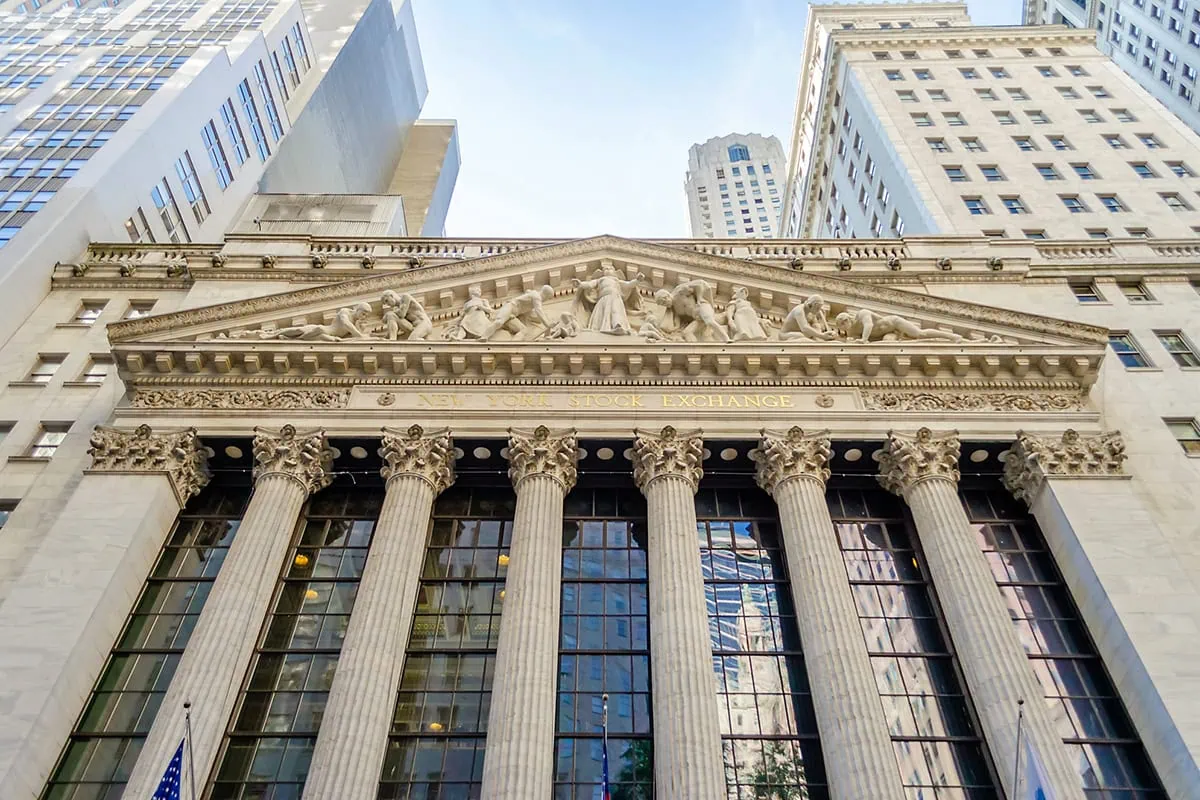
- Style: U.S. large-cap stock
- Assets under management: ~$740 billion
- Dividend yield: 1.1%
- Expense ratio: 0.015%, or 15¢ per year for every $1,000 invested
- Minimum initial investment: None
The S&P 500 Index is made up of hundreds of America’s biggest and most recognized companies. And it’s not just one of the most renowned stock-market indexes in the world—it’s one of the most productive. Even professional money managers struggle to beat it; according to the most recent S&P Dow Jones Indices data, just 14% of actively managed large-cap mutual funds have outperformed the S&P 500 over the trailing 10-year period, and that number shrinks to a mere 10% when looking at the past 15 years.
“I know guys that rate active managers in all these categories, and even they’re like, ‘I’m not buying actively managed large blend; I’m just indexing,'” says Daniel Sotiroff, Senior Analyst for ETF and Passive Strategies at Morningstar. “Because it’s so brutally tough to beat a dirt-cheap index fund in the large blend category.”
Even Warren Buffett, the Oracle of Omaha himself—considered by many to be the greatest investor in history—has said on multiple occasions that most investors, most of the time, should simply buy and hold an S&P 500 index fund and let it run.
And the Fidelity 500 Index Fund (FXAIX) is one of the cheapest ways to own the index, across mutual funds and ETFs alike.
What does it hold?
FXAIX tracks the S&P 500—a collection of 500 of America’s largest companies that have met certain size, liquidity, and earnings criteria. This index, which has been around since the 1950s, is considered a reflection of the U.S. economy. But it’s not a perfect representation, nor is the U.S. economy perfectly balanced. Consider that the technology sector accounts for a third of FXAIX’s assets, while real estate, materials, energy, and utilities are weighted at less than 3% apiece.
Related: The Best Fidelity Funds to Buy in 2026
Like many indexes, the S&P 500 is market capitalization-weighted, which means the greater the size of the company, the more “weight” it’s given in the index. Currently, trillion-dollar-plus tech stocks Nvidia (NVDA), Apple (AAPL), and Microsoft (MSFT) sit atop Fidelity 500 Index Fund’s holdings list.
Index funds usually buy and sell less than actively managed strategies. “Turnover” in a portfolio can generate capital gains that the fund must distribute to shareholders, and these distributions are subject to capital gains taxes if the fund is held in a taxable account. S&P 500 index funds are especially light on turnover and rarely distribute capital gains, making FXAIX and other S&P 500 trackers exceedingly tax-efficient, and thus optimal for taxable brokerage accounts. (Of course, there’s nothing wrong with holding them in tax-advantaged retirement accounts, either.)
Sector weights will naturally change over time as certain businesses come into and go out of favor, but right now, industrials are tops at 17%, followed by technology (15%), financials (14%), and consumer discretionary (12%). Also, thanks to both the market cap-weighting of the Russell MidCap Index and the high number of holdings, single-stock risk is minimal; currently, every stock is weighted at less than 1%.
Fidelity 500 Index Fund isn’t the only S&P 500 mutual fund. Far from it—numerous fund providers offer these products, sometimes across a variety of share classes. What makes FXAIX stand out from the rest is a combination of traits: It offers one of the lowest fees among S&P 500 trackers, it’s open to retail investors like you and me, and because Fidelity has no investment minimums, you can typically get started for as little as $1.
Make Young and the Invested your preferred news source on Google: Simply go to your preferences page and select the ✓ box for Young and the Invested. Once you’ve made this update, you’ll see Young and the Invested show up more often in Google’s “Top Stories” feed, as well as in a dedicated “From Your Sources” section on Google’s search results page.
2. Vanguard Dividend Appreciation Index Fund Admiral Shares

- Style: U.S. large-cap dividend stock
- Assets under management: ~$120 billion
- Dividend yield: 1.6%
- Expense ratio: 0.07%, or 70¢ per year for every $1,000 invested
- Minimum initial investment: $3,000
Not all dividend funds provide a high yield—or even try to. Occasionally, dividend funds such as the Vanguard Dividend Appreciation Index Fund Admiral Shares (VDADX) have different goals in mind.
Why? Well … without getting too far into the weeds, high dividends can sometimes be the result of significant price drops, and in some cases might not be sustainable.
What does it hold?
VDADX targets U.S. companies that consistently increase their cash distributions over time. Its underlying index is made up of firms that have improved their payouts on an annual basis for at least 10 consecutive years. High yield isn’t a priority. In fact, VDADX’s underlying index excludes the 25% highest-yielding eligible companies, implying that high current yields are actually a liability.
That said, VDADX’s different view on dividends produces two important potential benefits:
- High quality: Only firms with strong financials and excellent cash flows can afford to keep paying shareholders more every year. So, in a way, VDADX’s commitment to dividend growers acts like a quality screen, ensuring you’re owning a higher grade of stock.
- Higher yield on cost over time: These companies might not yield much right now, but if they continue raising their dividends, you should enjoy a higher “yield on cost”—what you’re actually earning based on the price at which you bought an investment. (Example: A $100 stock paying $1 in annual dividends yields 1% [$1 / $100 = 1%]. But if you bought the stock at $50 a couple of years ago, your yield on cost is actually 2% [$1 / $50 = 2%] … plus you enjoyed a 100% price gain along the way.)
VDADX holds roughly 340 predominantly large-cap stocks with bulletproof balance sheets and the ability to churn out cash—which they increasingly fork over to shareholders in the form of dividends. All of these dividend-growth stocks have raised their payouts for at least 10 years, but some have much longer histories of uninterrupted improvement. That includes Dividend Aristocrats, which are stocks that have raised their cash distributions annually for at least 25 consecutive years. And it even includes a few Dividend Kings (Aristocrats whose streaks are at 50 years or longer) such as Procter & Gamble (PG) and J&J.
You will not get exposure to real estate investment trusts (REITs). However, that’s not because of any quality issue with REITs; instead, it’s because most REITs are non-qualified, which means they have less favorable tax treatment than the qualified dividends typically paid by publicly traded companies.
I mentioned above that all the Vanguard index funds on this list have relatively low expenses. VDADX is a great example. The average fee on large-cap funds like this is 0.68%, according to Morningstar. But Vanguard Dividend Appreciation charges a mere 0.07%.
Fees are even lower for VDADX’s ETF class, Vanguard Dividend Appreciation ETF (VIG, 0.04% expense ratio), which goes for about $215 per share.
Related: 10 Best Dividend Mutual Funds to Boost Your Income
3. Vanguard Intermediate-Term Corporate Bond Index Fund Admiral Shares
- Style: Intermediate-term corporate bond
- Assets under management: ~$62 billion
- SEC yield: 4.8%*
- Expense ratio: 0.06%, or 60¢ per year for every $1,000 invested
- Minimum initial investment: $3,000
Most investors will want some exposure to bonds—debt issued by governments, companies, and other entities that pay interest to bondholders. But how much exposure you want will largely depend on your age.
Bonds tend to be much less volatile than stocks, for better or worse; it limits downside, yes, but it also limits upside. Instead, most of the return from bonds comes from the steady stream of interest income they produce. They’re not great for generating wealth, which is your prime concern when you’re younger, but they’re outstanding for protecting wealth, which becomes increasingly pivotal as you age.
However, making an educated purchase of a single bond is tougher than you might expect. Data and research on individual issues is much thinner than it is for publicly traded stocks, plus, some bonds have minimum investments in the tens of thousands of dollars. So, your best bet is to buy a bond fund, which can provide you with access to hundreds if not thousands of bonds. Your most economical bet is to do so through bond funds.
Take the Vanguard Intermediate-Term Corporate Bond Index Fund Admiral Shares (VICSX) for instance.
What does it hold?
VICSX allows you to invest in more than 2,200 investment-grade corporate bonds with maturities of between five and 10 years.
Investment-grade corporates are a little riskier than similar-maturity Treasuries, but you get a bit more yield as a result … and they’re not exactly poor-quality bonds. VICSX’s portfolio is split roughly 50/50 between BBB-rated bonds (the lowest investment-grade rating) and A-rated or above. Meanwhile, the focus on intermediates provides a fair blend of risk and income.
Duration (a measure of interest-rate risk) is 6.0 years, which implies that a 1-percentage-point increase in market interest rates would lead to a 6.0% short-term decline in the fund, and vice versa.
VICSX’s ETF version is the Vanguard Intermediate-Term Corporate Bond ETF (VCIT, 0.03% expense ratio), which goes for about $85 per share.
* SEC yield reflects the interest earned across the most recent 30-day period. This is a standard measure for funds holding bonds and preferred stocks.
Related: Best Target-Date Funds: Fidelity vs. Schwab vs. T. Rowe vs. Vanguard
Do you want to get serious about saving and planning for retirement? Sign up for Retire With Riley, Young and the Invested’s free retirement planning newsletter.
3. Fidelity Short-Term Treasury Bond Index Fund

- Style: Short-term government bond
- Assets under management: $3.5 billion
- SEC yield: 3.5%
- Expense ratio: 0.03%, or 30¢ per year for every $1,000 invested
- Minimum initial investment: None
Most investors will want some exposure to bonds—debt issued by governments, companies, and other entities that pay interest to bondholders. But how much exposure you want will largely depend on your age.
Bonds tend to be much less volatile than stocks, for better or worse; it limits downside, yes, but it also limits upside. Instead, most of the return from bonds comes from the steady stream of interest income they produce. They’re not great for generating wealth, which is your prime concern when you’re younger, but they’re outstanding for protecting wealth, which becomes increasingly pivotal as you age.
Some of the most defensive bonds you will find are short-term Treasury issues, for two reasons:
- As a general rule, the shorter the bond, the lower the risk that the bond might not be repaid. Interest rates matter, too. When rates go higher, new bonds pay more, which tempt people to sell their old bonds for the new, higher-paying bonds. But the temptation is much greater when you’re dealing with longer-term bonds with lots of payments remaining—and not so great for short-term bonds with one or just a couple payments left.
- U.S. Treasury bonds are backed by the full faith and credit of the U.S. government, and as a result, they’re among the highest-rated bonds on the planet. While there’s no 100% guarantee they’ll be repaid, there’s a far higher likelihood of repayment than the vast majority of issuers out there.
And this is the purview of the Fidelity Short-Term Treasury Bond Index Fund (FUMBX).
What does it hold?
Fidelity Short-Term Treasury Bond Index Fund invests in a tight grouping of 125 Treasury bond issues whose maturities span a few months to five years. That’s a bit longer-term than some other Treasury funds that limit their maturities to three years. But it still results in a portfolio average maturity of under three years, which is plenty short.
Duration (a measure of interest-rate risk) is just 2.5 years. This implies FUMBX would suffer a short-term decline of 2.5% in response to a 1-percentage-point hike in interest rates; conversely, it would only rise that much on a similar decline in rates.
But that’s OK as long as you know what you’re buying. If all you want is portfolio protection that can still generate some yield (plenty more than 3% currently), FUMBX is one of the best index funds you can buy.
* SEC yield reflects the interest earned across the most recent 30-day period. This is a standard measure for funds holding bonds and preferred stocks.
Related: Best Target-Date Funds: Fidelity vs. Schwab vs. T. Rowe vs. Vanguard
Do you want to get serious about saving and planning for retirement? Sign up for Retire With Riley, Young and the Invested’s free retirement planning newsletter.
Learn More About These and Other Funds With Morningstar
As I mentioned before, Morningstar Investor is a vital tool in my research, but it’s primarily designed for investors. And because the folks at Morningstar appreciate my years of citing their tool in my research, they’re allowing us to offer their Investor service at a discounted rate.
If you sign up using my exclusive link, you’ll not only get a 20% discount ($199) off the normal annual rate ($249), but you’ll also get a free 7-day trial so you can give it a go first!
Editor’s Note: This is a shorter, updated, and modified version of our full exploration of the market’s top index funds. If you want to see all 10 selections for 2026, check out our article, The 10 Best Index Funds You Can Buy for 2026.
Please Don’t Forget to Like, Follow and Comment
Did you find this article helpful? We’d love to hear your thoughts! Leave a comment with the box on the left-hand side of the screen and share your thoughts.
Also, do you want to stay up-to-date on our latest content?
1. Follow us by clicking the [+ Follow] button above,
2. Subscribe to Retire With Riley, our free weekly retirement planning newsletter, and
3. Give the article a Thumbs Up on the top-left side of the screen.
4. And lastly, if you think this information would benefit your friends and family, don’t hesitate to share it with them!