



Credit cards are a powerful tool for building credit and teaching kids about money. But with all the worries of credit and the responsibility that comes with it, diving straight into credit can present a lot of stress and quickly lead into a deep hole of debt – which is precisely why, historically, there haven’t been any credit cards for kids.
But that’s OK, for two reasons.
- That’s changing as banks and other financial companies are exploring special credit cards tailored toward minors and beginning to introduce them to the market.
- If you don’t feel comfortable with your kids having a credit card for now, you can take an important first step toward that by setting them up with their very first debit card.
Today, we’ll explore your options. We’ll discuss this emerging class of card, teach you more about the best debit cards for kids, and explain more about the relationship between kids and credit cards.
Featured Financial Products
The Best Credit Cards for Kids
Any parent can counteract poor money habits through financial education. With the right tools, you can give kids an edge that’ll help them build credit and make smart financial decisions.
Simply put: Unsecured credit cards—the traditional type of credit card that doesn’t require a deposit beforehand—are considered too hazardous a tool for kids. That’s why there are rules preventing companies from opening individual credit card accounts for anyone under age 18.
Historically, parents have had two solutions:
- Get their child a regular or prepaid debit card.
- Make their child an authorized user on the parents’ credit card.
The former, which we’ll talk about in a minute, is considered the safer and more traditional route. Traditional (and especially prepaid) debit cards for kids offer a number of guardrails to control a child’s spending, and over the past few years, several child- and teen-focused debit-card solutions have popped up.
While some parents have gone the latter route, making your child an authorized user on your credit card has some serious flaws. Many consumer credit cards won’t allow you to set spending limits on authorized users, for one. Also, if you make poor credit decisions, your child’s credit could suffer. And because kids at most are merely authorized users, credit card providers naturally don’t make their cards, websites, and apps with minors in mind.
Why Some Parents Opt for Debit Cards Instead
Many parents feel safer starting their children off with debit cards.
For young children without steady income or established budgets, or who haven’t yet developed a strong sense of money management, a prepaid debit card might be the best choice.
Prepaid cards allow parents to load funds onto their child’s spend card and monitor their activity.
If a child goes overboard, it’s easy to transfer funds from the associated parent account on the prepaid debit card, set spending limits on how much they can spend or where they can shop or even outright freeze their ability to make more purchases.
Prepaid debit cards for kids give parents the tools necessary to control spending, provide safeguards to teach their children about money management until the training wheels can come off, and offer children a sense of financial independence they want.
And because kids can’t spend what they don’t have on prepaid debit cards for kids, they can’t overdraw—meaning no credit implications for your kids’ future finances.
So, let’s talk about the lack of unsecured credit cards for kids, as well as what makes debit cards an attractive substitute. We’ll cover:
- Why aren’t unsecured credit cards for kids allowed?
- How old do you need to be to have a credit card in your name?
- How credit cards compare to prepaid debit cards for kids
- Best debit cards for kids
- What considerations you should make before opening a card
- What credit habits you should target
- Money lessons to consider
We’ll start out by discussing the problems with traditional credit cards for kids. Then we’ll look into why debit cards often make more sense as a starting point before transitioning into full-blown credit card options in their wallets—and discuss the best options for this important step.
Let’s dive in!
Why Aren’t Unsecured Credit Cards for Kids Allowed?
Why would you give a minor a credit card?
Well, a credit card for kids could help your child develop healthy money habits from an early age, allowing these financial literacy skills to compound from the start. However, if not managed properly, credit cards can quickly spell disaster. That’s because they front a line of credit, offering buying power you might not necessarily have the means to afford.
Combine this lack of financial resources with a considerable marketing effort to attract young consumers, and it would spell disaster from which it could take years to recover.
That’s why unsecured credit cards for teens simply don’t exist.
Typically, teens can’t get a credit card unless their parents grant them access on their own credit card account as an authorized user. Some credit cards allow this as young as 13, while others don’t specifically state a minimum age requirement. Otherwise, teens can’t get their hands on a credit card until they turn 18.
Even then, you’ll want to make sure you have the training wheels firmly attached to this credit card. That’s because one of the most common mistakes encountered by young adults is accumulating costly credit card debt.
You might be able to help your child out if and when this happens. But why not head it off at the pass instead? Share, practice and instill financial literacy skills with your child as early as possible—before real money is at stake.
Kids can learn about money management through several means, though the best option is through modeled behavior (in other words, seeing you handle credit cards responsibly as an adult).
In general, though, it’s best to think of credit cards for kids as an opportunity for a teen to access credit for the first time and begin building a credit history.
Along with that comes a responsibility–one you can teach them about by explaining how managing their credit well will build their credit scores and put them on the path to financial security.
Do you want to get serious about saving and planning for retirement? Sign up for Retire With Riley, Young and the Invested’s free retirement planning newsletter.
How old do you need to be to have a credit card in your name?

Minors don’t meet the eligibility requirements to receive a credit card under their own name. Even once your child reaches the age of majority (18 in most states), they’ll still face a hurdle to obtain a card by themselves.
They’ll need to meet other criteria outlined in the CARD Act of 2009 related to income or expectation of having access to financial assets. As a result, parents interested in getting a credit card for their kids will first need to consider adding them as an authorized user to their own account.
18- to 20-year-olds can have their own credit card under certain circumstances:
- Have income from a job or other independent sources of income; or
- Qualify with third-party income if they have a reasonable expectation of access to it; and
- Have a registered Social Security Number or Individual Taxpayer Identification Number (usually)
If your child meets these items, and is age 18 to 20, you might consider pointing them toward credit cards for those with no credit history (starter credit cards). And if your child is a student looking to build credit, consider these best credit cards for students with no credit history.
Let’s now talk about kids’ debit card options, how they allow you to establish important concepts such as savings goals, and what they entail.
What Is a Debit Card for Kids?

Minors do not have the legal capacity to enter into contracts themselves. Thus, children can’t open their own bank account until they reach the age of majority in their state—often 18 years old.
Parents interested in offering their kids a bank account and paired debit card can still choose a number of possible paths:
1. Opening a sub-account from their own bank account
This can provide your kids with a card to use while you can maintain control over the account itself. Under this situation, it’s still likely that your child will need to be at least 13 years old before receiving a debit card.
However, these accounts might not come with the features you want for maintaining control over your child’s spending behaviors.
2. Opening a joint banking account
Another option to consider includes opening a joint bank account with your kid or teen. This means you both have ownership over any joint accounts you share, as well as the assets held inside them.
3. Opening a debit card for kids (and teens)
This is a great route for balancing parents’ desires to teach their kids about money and providing sufficient parental controls and oversight to make sure a child makes smart spending and money decisions.
Debit cards for teens offer parents custom spending controls, spending notifications, merchant blocking, daily ATM and spending limits, plus other controls enabled through feature-filled mobile apps.
Some new apps even allow you to lock the card or limit where your child spends money.
These cards also effectively function as a prepaid debit card for kids and teens because you can establish parental controls. Traditional banks or debit cards might not allow you to do this beyond keeping the balance at a certain level.
Related: 5 Best Free Debit Cards for Kids & Teens [Earn, Save & Spend]
What Are the Best Debit Cards for Kids and Teens?
The most natural moment to place plastic in the hands of your children with their name on it is in high school when they’re beginning to develop independence, getting a driver’s license or spending time away from with friends.
Though, instead of credit cards for kids, you can start them off with debit cards for kids and teens that withdraw money directly from the prepaid card balance or from the associated bank account.
A child will become familiar with the responsibility of carrying a card and not purchasing more than they can afford. You can load it with weekly allowance payments, money from a summer or after-school job or even financial gifts they receive from friends and family.
After they show enough responsibility and they turn 18, you can move on to credit cards for kids.
Have a look below at some debit-card alternatives to credit cards for kids, or consider adding your child to one of your existing credit cards as an authorized user. We’ve compiled a list of the best debit cards for kids and teens so you can compare them and determine which card makes the most sense for your (and importantly, your child’s) needs.
| App | Apple App Store Rating + Best For | Fees | Promotions |
|---|---|---|---|
 Greenlight Greenlight | ☆ 4.8 / 5 Customer rating and parental controls | $4.99/month for up to five kids | First month free |
 Copper Banking Copper Banking | ☆ 4.9 / 5 Teen financial independence | Copper $4.95/mo., Copper + Invest: $7.95/mo. | None |
 GoHenry GoHenry | ☆ 4.6 / 5 Accessible customer service support | Individual: $4.99/child/mo. Family: $9.98/mo. for up to four children | Free month trial |
 BusyKid BusyKid | ☆ 3.5 / 5 Teaching balanced financial approach via chores & allowance | $3.99/mo (5 cards); $38.99/yr | 30-day money back guarantee |
 FamZoo FamZoo | ☆ 4.6 / 5 Financial literacy resources | $5.99/mo per family | Free month trial |
 Axos First Checking Axos First Checking | ☆ 4.7 / 5 Teens ready to learn about money management | Free | None |
 Chase First Banking Chase First Banking | ☆ 4.8 / 5 High customer satisfaction from a major bank without fees | Free, no fees | None |
| *Apple App Store Rating as of November 8, 2023. | |||
1.Best Rated Overall: Greenlight
- Available: Sign up here
- Price: Greenlight Max: $9.98/mo. Greenlight Infinity: $14.98/mo.
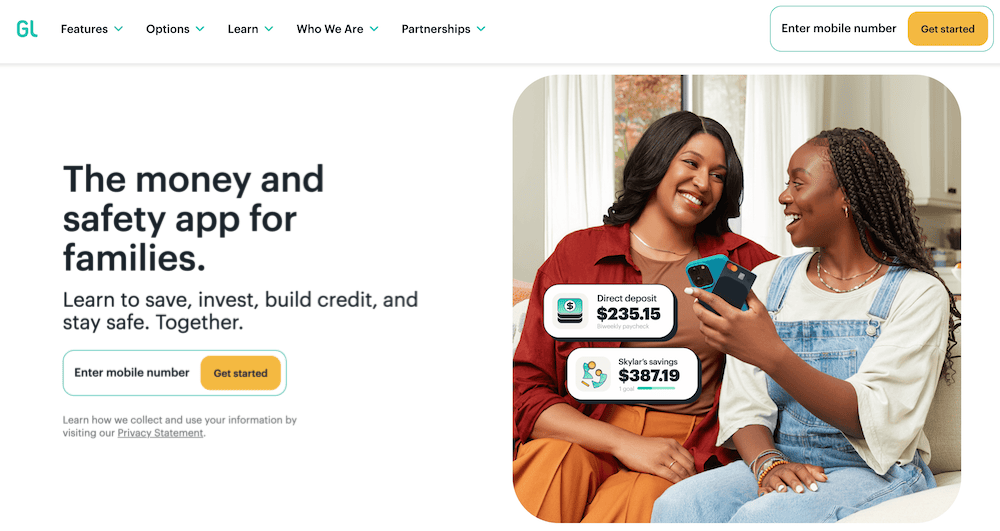
Greenlight, through its Max and Infinity tiers, is an investment account for kids that comes paired with a debit card and bank account.
It’s easy to use and can double as a savings account and banking apps for teens. The investing app will teach the basics of investing, how to invest in stocks and ETFs, and more.
It works best if parents are involved in the process because it requires linked brokerage accounts from custodian banks or brokerages.
The all-in-one plan teaches them important financial skills like money management and investing fundamentals—with real money, real stocks and real-life lessons.
You can use the investing feature to:
- Start investing with as little as $1 in your account
- Buy fractional shares of companies you admire (say, kid-friendly stocks)
- No trading commissions beyond the monthly subscription fee
- Teens can only invest in U.S.-listed stocks and ETFs that have either a market capitalization over $1 billion or a three-month average daily dollar volume of more than $500,000
- Parents must approve every trade directly in the app.
Each account supports up to five kids.
Consider opening a Greenlight Max or Infinity account to start investing in a joint investment account as a teenager today. Or, you can read more in our Greenlight Card review.
- Greenlight is a financial solution for kids that allows them to spend with a debit card, earn money on savings, and even invest their money.
- Greenlight offers flexible parental controls for each child and real-time notifications of each transaction. And it's the only debit card that lets you choose the exact stores where kids can spend on the card.
- Parents can use this app to teach kids how to invest with a brokerage account through Greenlight Max, Infinity, and Family Shield plans.
- Families can earn 2% (Core), 3% (Max), 5% (Infinity), or 6% (Family Shield) per annum on their average daily savings balance of up to $5,000 per family. Also, Max and Infinity families can earn 1% cash back on their monthly expenditures.
- Unlike many apps that simply provide features and controls, Greenlight is also designed to spark discussions with children about spending, investing, and more, fostering a better educational experience.
- Best-in-class parental controls (can prohibit specific stores)
- Can add brokerage account to invest in stocks
- Intuitive Parent + Kid apps
- Competitive cash back & interest rates
- Parent-Paid Interest
- High price points
- No cash reload options
- No parent / child lending

Related: 13 Best Allowance and Chore Apps for Kids [Easier Family Life]
2. Copper Card (Best for Combined Teen Independence and Cost)
- Available: Sign up here
- Price: 30 days free. Copper: $4.95/mo. and Copper + Invest: $7.95/mo.
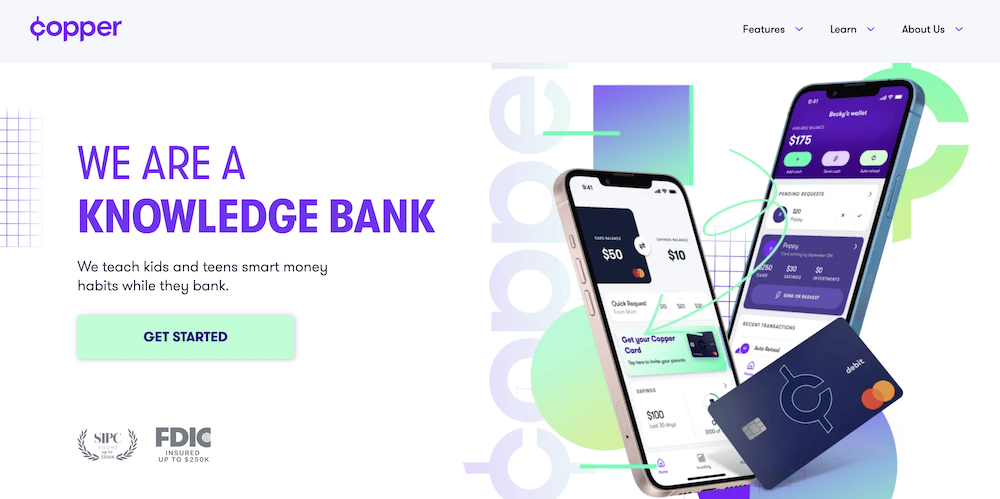
Copper Banking was founded on the belief that kids and teens should have equal access to financial education and should be empowered to learn by doing. Now, the company is on a mission to help children gain real-world experience by giving them access to their money in a way that traditional banks can’t.
The Copper app and debit card teaches your child how to make smart financial decisions by creating a platform where parents and their kids can connect. With the Copper app, you get easy snapshots of your accounts. And with the Copper Debit Card, it’s easy to shop in-store or online, including with Apple Pay or Google Pay.
Plus, users get exclusive access to engaging advice curated by a team of financial literacy experts who provide tips on how to take control of their financial future.
Copper Banking Features:
- Send/Request: Kids and parents can easily send and receive money all at the touch of a button.
- Spend: Spend using Apple or Google Pay, or using the Copper Debit Card.
- Withdraw: Access your money from more than 55,000 fee-free ATMs.
- Monitor: Get a snapshot of all your child’s spending in an easy-to-read dashboard.
- Save: Gain quick snapshots of your kid’s savings and helpful tips on how to save even more. Set up savings buckets and save for the things that you want.
- Learn: With the help of Copper’s team of financial literacy experts, gain bite-sized tips on how you can maximize your money and prepare yourself for your financial future.
The basic Copper account includes the above banking features. With Copper + Invest, your child also gets access to automatically curated smart portfolios built with their preferences in mind. Your child is given a questionnaire that helps Copper determine a portfolio based on their age, income, net worth, investment objective(s) and investment horizon. Copper then recommends one of three ETF portfolios—Moderately Aggressive, Aggressive, and Extra Aggressive—made up of thousands of stocks. Parents can review the portfolio to ensure it matches with not just your child’s preferences, but your family’s. (Portfolios can be changed later on by accessing the Support chat.)
Your child can begin investing for as little as $1, then add more contributions down the road. Copper will automatically rebalance the portfolio as needed to make sure it always keeps up with your child’s investment preferences.
Copper is available to kids 6 years and older.
Read more in our Copper Banking review.
- Copper is the digital bank and debit card for teens built with the mission of creating a financially successful generation.
- Send/Request: Teens and parents can easily send and receive money all at the touch of a button.
- Spend: Pay with a digital wallet via Apple Pay or Google Pay or use the physical Copper Debit Card.
- Monitor: Get a snapshot of all your spending in an easy-to-read dashboard.
- Save: Gain quick snapshots of your savings and helpful tips on how you can save even more. Set up savings bucks and save for the things that you want.
- Learn: With the help of Copper's team of financial literacy experts, learn more about how to maximize your money and prepare yourself for your financial future.
- Allowance administration
- Financial education resources
- Network of 55,000-plus fee-free ATMs
- No chores tracking or assignment
- No parental controls beyond notifications

3. Acorns Early (Best for Customer Service)
- Available: Acorns Early Lite | Acorns Gold
- Price: Acorns Early Lite: Free 30-day trial, then $8/mo. Acorns Early: $12/mo.
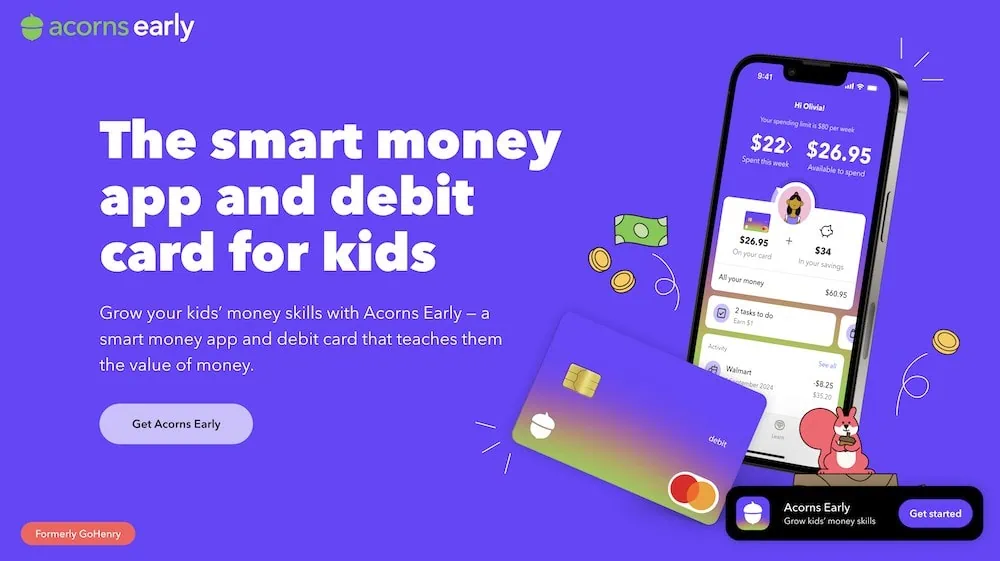
Many reviewers have long painted Acorns Early (formerly GoHenry) as just a way to spend. However, I see it as a real financial solution for minors—a debit card, yes, but also an app-based ecosphere that provides education and experience for the child, as well as ways for parents to keep their kids safe and teach them responsibility.
An Acorns Early account includes a smart money app, as well as Visa debit cards for up to four children. These debit cards can be used to spend anywhere Visa is accepted (so, millions of vendors online and in stores), as well as withdraw cash from ATMs. An Acorns Early account also allows kids to set savings goals, which they can fund manually or via autosave. And the app also hosts educational materials to help children and teens alike develop good money habits.
This FDIC-insured account also enjoys a variety of safety features, including chip and PIN protection, secure PIN recovery, and fraud protection. Acorns Early also offers parents additional peace of mind by providing a number of controls, including:
- Real-time spending notifications
- Card lock/unlock
- Savings goal lock/unlock
- Adjustable spending limits on a per-transaction and per-week basis
- Card category block/unblock for in-store purchases, online purchases, and ATM withdrawals
- Adjustable spending block/unblock at stores that sell age-restricted goods such as firearms and alcohol
Also, kids can only spend whatever money is available on the card because it’s a prepaid debit card. That means parents don’t have to worry about costly overdraft fees or their kids running up a debt.
Acorns Early also stands out to us as one of the best prepaid debit cards for kids because of its outstanding customer service, which it inherited from GoHenry. Acorns Early users enjoy seven-day-a-week phone service (9 a.m. to 8 p.m. ET Monday-Friday, 9 a.m. to 5 p.m. ET Saturday-Sunday), as well as 24/7 live chat support.
Acorns Early has no minimum age requirements but recommends starting at age 6 or older. Parents have two ways of signing up for Acorns Early:
- Sign up for Acorns Early Lite. This subscription level provides you with everything mentioned above.
- Sign up for Acorns Gold. Acorns Gold is the top Acorns subscription tier for adults, and it provides a wealth of banking, investing, and other features. However, it also includes a subscription to Acorns Early (again, good for up to four children), and it unlocks Acorns Early Invest: a UGMA/UTMA custodial account you can use to invest for your kids’ future.
Acorns frequently offers small bonuses for anyone who signs up with our links. You can check out current offers in the box below, or read more about this app in our Acorns Early review.
- Acorns allows you to sign up for investment, retirement, and checking accounts for you and your family, learn how to earn more money, and grow your investing knowledge.
- Famous for investing spare change automatically through Round-Ups, this all-in-one financial app helps younger generations start investing earlier.
- Invest in expert-built portfolios made up of diversified ETFs.
- Silver tier includes perks such as a 25% match on Acorns Earn rewards (up to $200/mo.), generous APYs on Checking and Emergency Fund, and live Q&As with investing experts.
- Gold tier includes perks such as a 50% match on Acorns Earn rewards (up to $200/mo.), $10,000 in life insurance, and picking individual stocks for your portfolio.
- Gold also comes with a free Acorns Early account for up to four children. It's also the only tier to offer Acorns Early Invest: a UGMA/UTMA custodial account where you can save toward your kids' future and get a 1% match on up to $7,000 in contributions annually.
- Earn even more with Later Match: Acorns will match up to 1% (Silver) or 3% (Gold) of all new IRA contributions in your first year.*
- Special offer: Get a free $20 bonus investment when you sign up with our link and start making recurring investments.**
- Robo-advisor with affordable fees (on larger portfolios)
- Fixed fee model
- Round-ups
- FDIC/SIPC insurance
- IRA match (Personal Plus and Premium)
- High fixed fees for small balances
- Limited investment selections
- Must subscribe to Premium for any self-directed investing options

Related: Acorns Early (Formerly GoHenry) vs. Greenlight
Do you want to get serious about saving and planning for retirement? Sign up for Retire With Riley, Young and the Invested’s free retirement planning newsletter.
4. FamZoo (Best for Financial Education)
- Available: Sign up here
- Price: Free trial, then $5.99/family/mo.
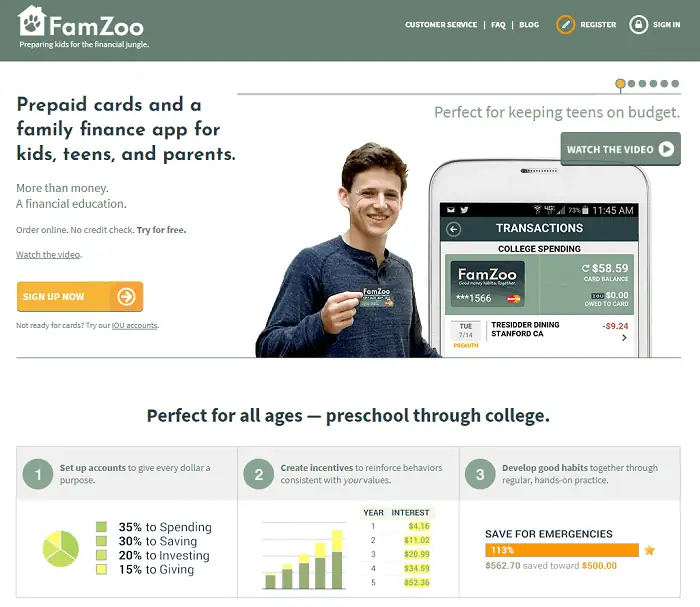
FamZoo is another service for parents interested in opening prepaid debit cards to manage their children’s spending.
It works by having parents release money into their child’s account and then having the card work with a loaded balance. Money can be loaded onto the cards at any time.
FamZoo acts like a regular checking account with a linked debit card except FamZoo makes sure the account can’t be charged overdraft fees, saving you money.
Adults are able to monitor the transactions being made. After a free trial, this app costs $5.99 per month, but the price goes down if prepaid in advance.
FamZoo is our top education choice because of its strong financial education library which improves its overall value.
The product has no minimum age requirements, but recommends starting earlier than later.
- FamZoo is the prepaid debit card used by families to teach children good financial habits from an early age.
- FamZoo lets you fund your account in a variety of ways, including bank account, debit card, payment app, digital wallet, and cash.
- Many of the app's functions also have financial literacy in mind, including Parent-Paid Interest, parental loans, and reimbursements.
- Robust, customizable allowance and chores functions.
- Prepaid card without overdraft fees
- Highly customizable allowance and chores functions
- Strong financial education resource library
- High fee at monthly rate
- No paired investment account
- Weak parental controls

Related: Greenlight vs. Famzoo
5. First Checking by Axos Bank (Best Free Debit Card for Teens From an Online-Only Bank)
- Available: Sign up here
- Price: Free
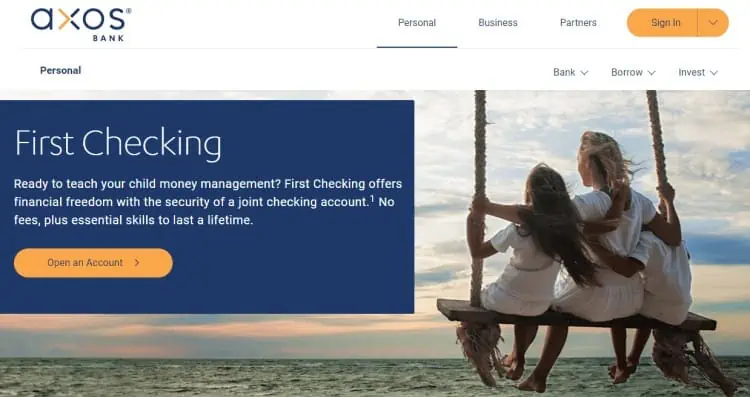
First Checking by Axos Bank is the ultimate starter checking account for teens which also comes with a debit card. The world of banking can be a little scary, but not with the simplicity and power of Axos’ First Checking Account.
The account works as a joint account between a parent or guardian and their teen, allowing for easy-to-set, customizable parental controls with a debit card dashboard.
Parents and teens can manage almost every part of the banking experience through a convenient mobile app or through the online desktop portal. Perfect for modern families who always find themselves on the go.
The First Checking account from Axos Bank gives teens their first taste of financial independence by giving them their own checking account (which pays interest!) and free debit card for teens that has daily cash withdrawals limits of $100 and purchase limits of $500.
This provides safeguards against teens getting carried away with the money held in their account.
Further, you can have up to $12 of domestic ATM fee reimbursements per month, avoid any monthly maintenance, overdraft or non-sufficient funds fees—essentially making the account free!
The account carries the highest level of security through biometric authentication techniques like fingerprint readers, voiceprints and facial recognition (pending smartphone feature availability).
The product has a minimum age requirement of 13 and will convert to an Axos Checking Account after reaching the age of majority.
Read more in our Axos First Checking Account review.
- Axos Bank First Checking is a joint checking account targeted for teenagers ages 13-17 and their parents.
- Account holders get a Visa or Mastercard debit card that can be used to spend online or in person, or to withdraw cash at any ATM. (Axos provides up to $12 in monthly domestic ATM fee reimbursements.)
- No monthly maintenance, overdraft, or non-sufficient fund fees.
- The debit card's security features include account alerts, card locking, and daily transaction alerts of $100 (cash) and $500 (debit).
- Currently, you can earn up to 0.10% APY on any balance.
- Free (no monthly maintenance fees)
- ATM fee reimbursements (up to $12 per month)
- Converts to adult checking account after minor reaches age of majority
- No paired investment account
- No robust financial literacy resources

Related: 10 Best Greenlight Alternatives
Featured Financial Products
Related Questions on Debit Cards and Credit Cards for Kids
What is a prepaid card?

A prepaid card is a type of payment card that can be loaded with money in advance and then used to purchase goods or services without incurring debt from the issuer.
The most common type of prepaid card is a prepaid debit card, which acts like making bank account withdrawals when purchasing goods and services.
You can also use a secured credit card, which works similarly to traditional plastic but requires you to front the money you spend to avoid overspending your balance.
You can also have another type of prepaid card, such as gift cards, which can only be spent on one merchant offering a particular product or service.
Make Young and the Invested your preferred news source on Google
Simply go to your preferences page and select the ✓ box for Young and the Invested. Once you’ve made this update, you’ll see Young and the Invested show up more often in Google’s “Top Stories” feed, as well as in a dedicated “From Your Sources” section on Google’s search results page.
Do debit cards for kids help build credit?
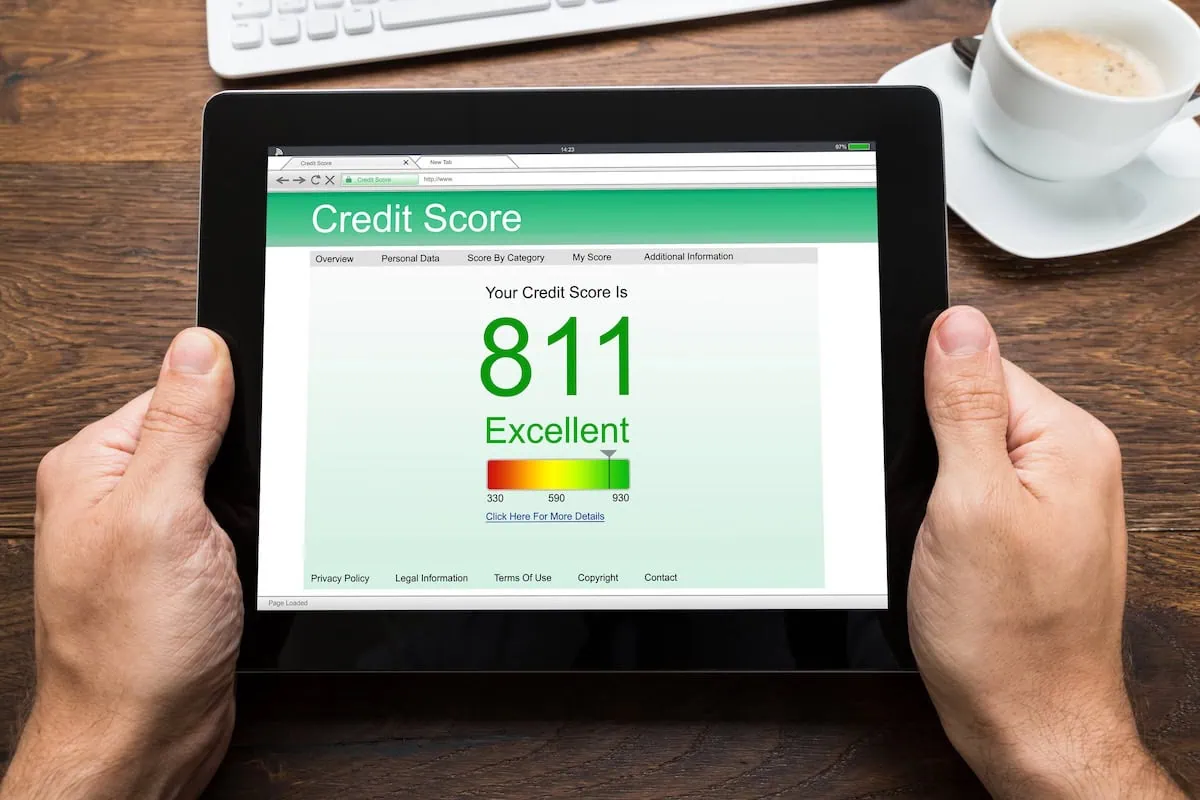
Despite a prepaid debit card having the same look and feel of a regular credit card, these cards don’t tend to help to build your credit like a credit card can.
For an account to impact your credit score, it needs to count as a debt or liability. To build good credit, you need to make regular payments on these debts over long periods of time. This factor plays the biggest role in building your credit. The secured Step Visa Card, for instance, can report two years’ worth of payment history once you turn 18, and will continue providing updated data to the credit bureaus after that.
A prepaid debit card, on the other hand, works like a regular debit card where you load the card with money (or, in the case of a debit card issued by a banking app or institution, have a balance in your account) and draw on the funds when you make purchases.
You can use a prepaid card like a credit card, but it won’t necessarily build credit like a credit card. Some debit cards do offer the ability to run them as credit cards when processing payments, acting as a means for building credit history and your credit score.
Though, for most prepaid cards, because you don’t borrow money, the account doesn’t get reported to credit bureaus and therefore has no effect on your credit score.
Related:
- How Parents Can Help Their Children Build Credit
- Joint Credit Cards: Can They Help to Build Your Credit?
What Goes Into a Credit Score?

1. Payment history
Making timely payments is important for your credit score, representing as much as 35% of your total FICO score. Missing one payment can have a negative impact on your credit score (though it shouldn’t ruin it entirely).
Why such a big impact? Lenders want to assess your ability to repay debts in a timely manner, meaning you pay what you agree to pay when you agree to pay it.
Do this consistently and over long periods of time and you will see your credit score increase.
Because of the outsized importance of this credit factor, staying on top of payment due dates and amounts becomes a necessity to build credit.
Keep track of when payments must go to creditors by setting up automatic payments where possible. Setting your bills on auto-pay can save not only time for individually initiating each payment, but also the headache of being late and dinging your credit score.
2. Total available credit / credit utilization ratio
Your credit usage, especially in relation to your available credit, also has a big impact on your credit rating, accounting for 30% of your score.
The metric used to measure this credit usage, called the credit utilization ratio, is calculated by dividing your outstanding revolving credit balances by your total available revolving credit balances. This ratio provides valuable insight to creditors about how you use credit. Lenders want to know how much credit you are using, especially in relation to how much credit is available to you.
A high credit utilization ratio (above 30%) will likely hurt your credit score, while a low one (below 20%) might help it or not have any effect at all on your credit rating.
3. Length of credit history
Lenders want to see how long you’ve had credit and how well you’ve handled that credit since it’s been open. This credit factor can determine 15% of your FICO score by evaluating the average age of your open lines of credit.
All things equal, longer average credit histories result in better credit scores.
4. Types of credit (diversity or mix of credit lines)
Not only do lenders care about your credit history and your ability to make timely payments (both huge credit factors), but they also like to see a diversity of good credit opportunities you’ve had in the past and maintain today.
Children won’t have many opportunities to have a wide array of credit lines, but they don’t need these just now. Instead, they can start with a single line of credit as an authorized user through a family member’s existing or new credit line.
If teenagers start building credit now, this new line of credit will still help them in the long run—so long as the account remains open.
5. Credit inquiries (new attempts to access credit)
Creditors also want to see how often you seek new credit. Going after financing regularly might indicate an increased risk because you constantly seek new forms of funds to stay afloat. Whether or not that’s actually the case, this can still serve as a red flag on your score, potentially hurting your credit if done too often.
These pulls on your credit, called hard inquiries, stay on your report for two years or longer, depending on the type of inquiry.
A child shouldn’t worry too much about this because any inquiry that hits their report now will likely fall off before they need it.
At this age, the child wants to establish credit and slowly build their credit limit through having smart credit use and a longer credit history.
A Smart Way to Approach Credit Cards for Kids
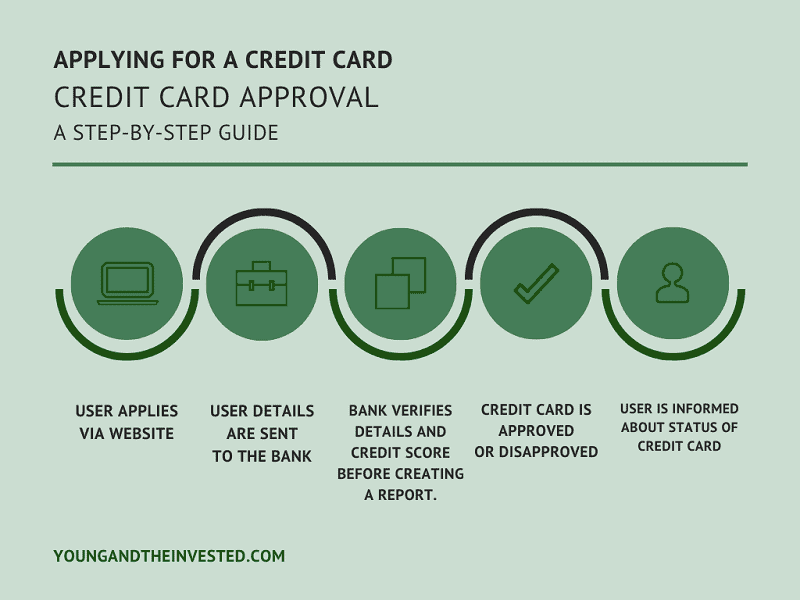
Although children can get credit cards for kids early enough to build their credit, they can just as easily end up damaging it by using them irresponsibly.
Instead, you might consider getting the best of both worlds by instead getting them a kids debit card and adding them as an authorized user to your own credit card.
This way, they get the kids debit card to learn good financial habits without risking irresponsible spending while also benefiting by building good credit scores through being added as an authorized user to your credit card.
After all, as a general rule, minors can’t get credit cards under their own name. So, until they reach the age of majority in their state of residence, they really only have the option of being added as an authorized user on credit cards you hold in your own name.
With debit cards for kids, you can still get them into the practice of learning about credit cards while only having the exposure of a prepaid debit card.